Wild
At 50 Below, This Horse Goes Out for Breakfast
Yakutian horses live outdoors all winter in one of the coldest inhabited places on Earth. Their ancestors arrived there not very long ago.
Wild
A wood frog's heart stops and most of its body freezes, and then in spring it hops away.
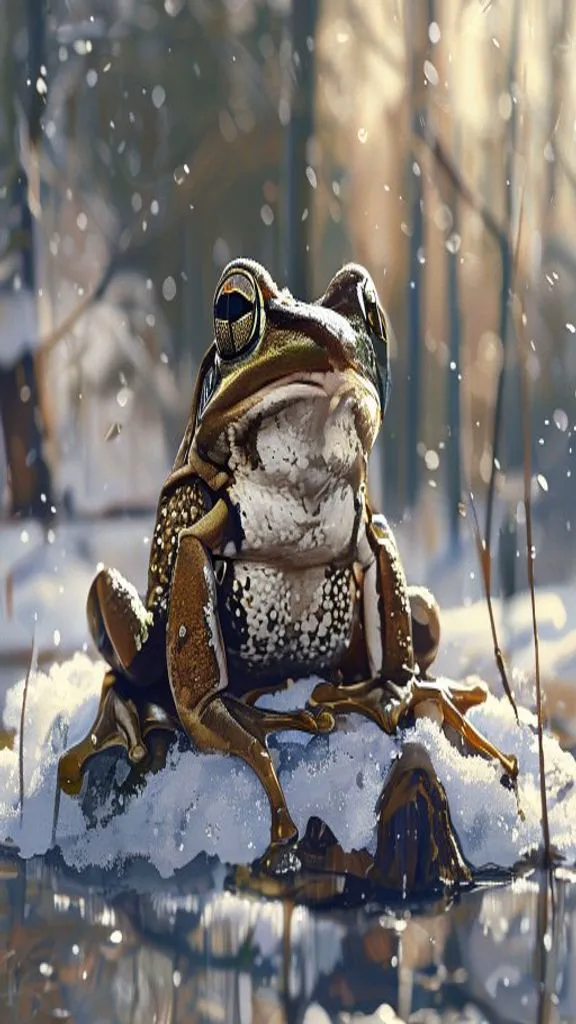
In spring, a frog wakes up under a pile of leaves, and its heart starts beating again.
Again, because it had stopped.
For weeks, this frog was frozen. Not cold. Frozen, with ice inside its body, a frog-shaped lump that you could have picked up and tapped on something hard. No breathing. No heartbeat. If you'd found it in January, you'd have said it was dead.
It wasn't. It's a wood frog, and it does this every winter. It's a small brown frog, a few centimeters long, with a dark patch over each eye like a bandit's mask.
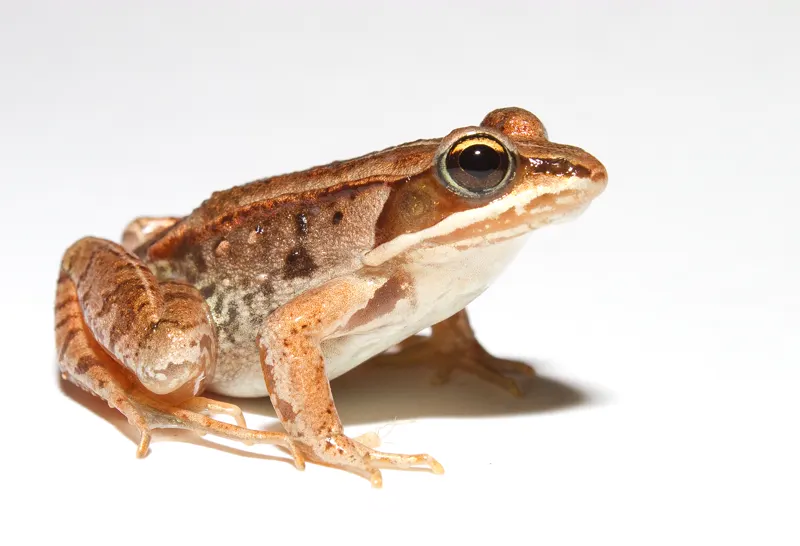
Wood frogs live across the northern part of North America, as far north as Alaska, even beyond the Arctic Circle. They don't dig deep into the mud the way some frogs do. They just settle into the leaves on the forest floor, and when the temperature falls far enough, they freeze. Ice grows in the spaces around the frog's body, under the skin and in the belly. About two-thirds of the water in its body can turn into ice. The heart stops. The blood stops moving. From outside, it's a frozen frog.
The trick is on the inside. When the cold starts to arrive, the frog's liver turns stored sugar into glucose and floods it through the body. Sugar works like antifreeze. It protects the water inside the frog's cells so that the cells don't freeze, which matters because ice crystals inside a cell can tear it apart. The ice forms outside the cells instead. The cells shrink a little and wait.
Then spring comes, and the thaw. The frog warms up, the ice melts, and somewhere in all that the heart gives a beat. Then another. Within a day or so it's breathing, and a little later it's hopping.
Scientists have a practical reason to care. When doctors move a human organ to a patient who needs it, the organ has a limited number of hours before it's no use. If we understood the frog's trick well enough, organs might be stored for much longer. Nobody has solved that yet, and people aren't frogs, but it's one reason researchers keep studying them.
The frogs don't all make it. A winter that's too long or too cold, or ground that's the wrong kind, can be too much for them, as with most animals. But enough survive that the species is still common across a very large part of the continent.
And the first thing a wood frog does after spending a winter as an ice cube is go and find a pond, because it's spring and there's a lot of singing to do. A wood frog's song, if you've never heard one, sounds a lot like ducks quacking.
Wild
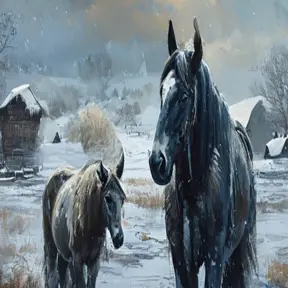
Yakutian horses live outdoors all winter in one of the coldest inhabited places on Earth. Their ancestors arrived there not very long ago.
Wild
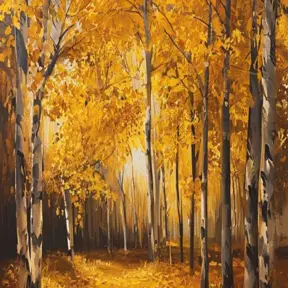
Pando in Utah is a single clone, joined at the roots. How old it is nobody agrees.
Wild
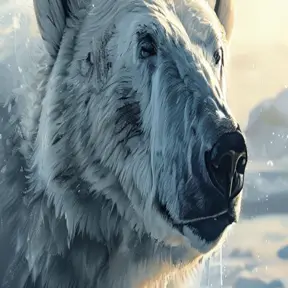
The skin is dark. The hairs are see-through. Once, in a zoo, they turned green.
Wild
Researchers in Seattle wore a rubber mask to trap crows. Years later, the crows still scolded it.