Wild
At 50 Below, This Horse Goes Out for Breakfast
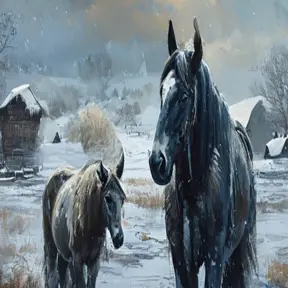
Yakutian horses live outdoors all winter in one of the coldest inhabited places on Earth. Their ancestors arrived there not very long ago.
Wild
The skin is dark. The hairs are see-through. Once, in a zoo, they turned green.
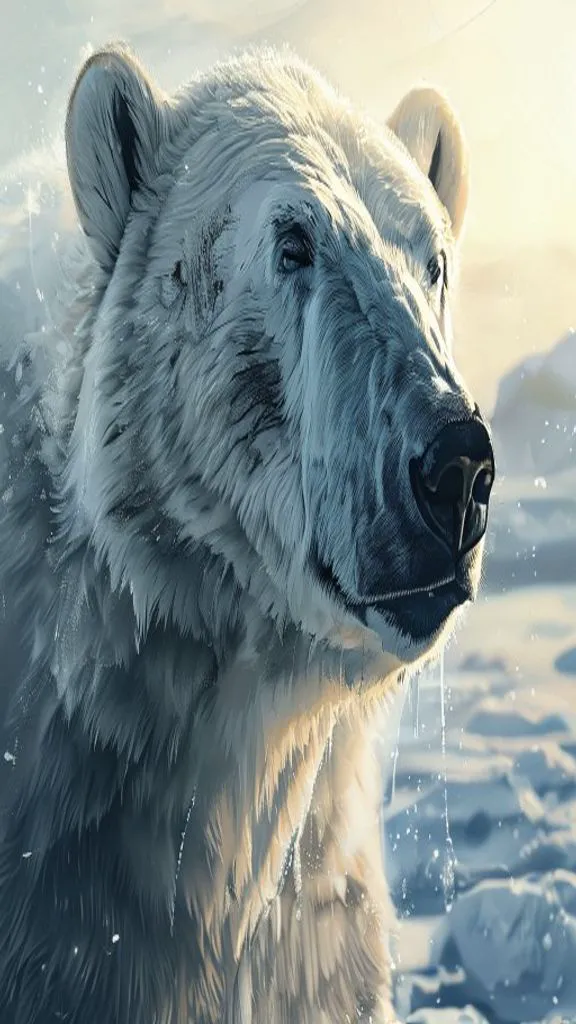
Look closely at a polar bear's nose, or its lips, or the pads of its feet. They're black. And so is the skin that covers the rest of it, hidden under all that fur.
Next, the fur. It isn't white. Each hair is a thin, hollow tube with no color in it at all, a bit like a tiny see-through straw. So why does a polar bear look white? For the same reason snow does. Snow is made of ice crystals, and every one of them is clear. But when light bounces around between thousands of tiny clear surfaces, it scatters in every direction, and what reaches your eye is white. Clear straws pile up the same way. In photographs taken with ultraviolet light, a polar bear looks dark against the snow, because the hairs soak up that kind of light.
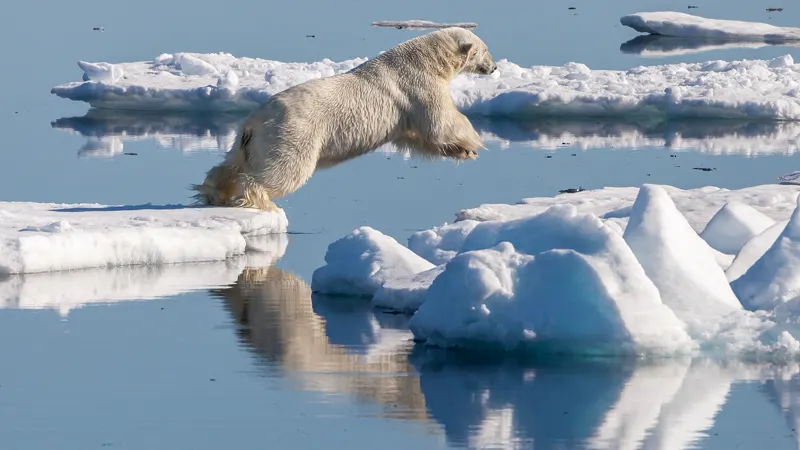
You may have heard that the hairs work like tiny glass cables and carry sunlight down to the black skin, where it warms the bear. It's a lovely idea, and it was popular for a while. But in 1988 two researchers tested hairs from polar bears, and almost no light made it down the length of a single hair. The idea mostly didn't hold up. These days scientists think the hollow hairs mainly scatter light and trap heat, and they're still working out exactly how the sunlight is handled.
The skin is dark because dark things absorb light, and so any sunshine that gets through the fur is taken in as warmth. That helps. But it isn't the main thing keeping the bear warm. A thick layer of fat under the skin and a dense undercoat do most of the work, and they work so well that a polar bear can be hard to spot with a heat camera. Those cameras see heat leaking out of a body, and a polar bear leaks very little. The places you'll see it glow are the nose and breath.
Then there's the green bears. In 1979, some polar bears at a zoo in San Diego turned green. Nobody was playing a joke. Algae, the same slimy stuff that turns pond water green, had found its way into the hollow centers of the hairs, and in the warm, damp air of California the algae thrived. The zoo got rid of it by washing the bears with salt water, and the bears went back to white.
Wild bears can change color too, but in less surprising ways. In summer, their fur often turns a bit yellow, from oils and from the sun. It's the same fur, just a different shade.
So the white bear is a black-skinned animal wearing a coat of clear straws, standing on a field of clear ice crystals.
Wild
Yakutian horses live outdoors all winter in one of the coldest inhabited places on Earth. Their ancestors arrived there not very long ago.
Wild
Pando in Utah is a single clone, joined at the roots. How old it is nobody agrees.
Wild
Researchers in Seattle wore a rubber mask to trap crows. Years later, the crows still scolded it.
Wild
Muktuk is the skin of a whale with a thin layer of blubber. It also carries vitamin C.