Cities
Those Leaning Houses in Amsterdam Are Mostly Leaning on Purpose
A lot of canal houses tip forward a few centimeters. The builders planned it. The sideways lean is a different story.

Cities
The Vasa was the grandest warship in Sweden. It sailed for less than a mile.
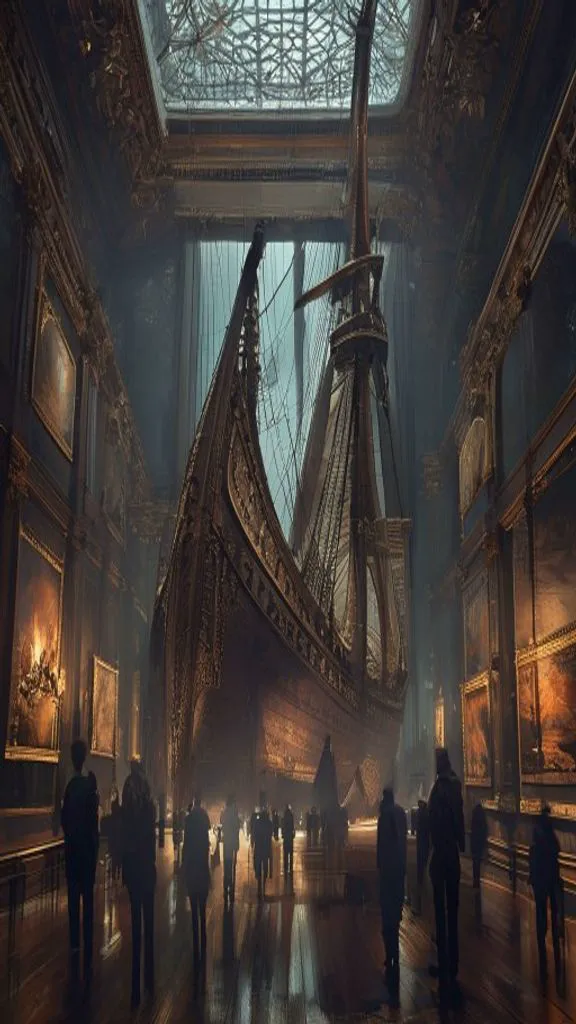
In April 1961, a crowd stood in Stockholm and watched a ship come back up out of the water. It had been down there for 333 years.
The first time people gathered to watch that ship, things went worse.
That was a Sunday in August 1628. The ship was called the Vasa, and it was meant to be the pride of the Swedish navy, built for King Gustav II Adolf. It was long, tall and covered in carved figures, hundreds of them, lions and soldiers and gods, painted in bright colors. It had sixty-four guns. Everyone wanted to see it leave.
It left the harbor, caught a gust of wind, leaned over, and came back upright. A second gust hit. The ship leaned over again, and this time water poured in through the open gun ports, the square holes the cannons stick out of. The Vasa went down in the harbor, in front of everybody, after sailing about thirteen hundred meters. That's less than a mile. Around thirty people on board are believed to have died.
What went wrong? Mostly, the ship was top-heavy. It was narrow for its height, it had an extra row of heavy guns up high, and there wasn't enough weight low down to keep it steady. The usual story is that a test was done before it sailed: a group of men ran from side to side across the deck to see how much the ship would rock. They stopped after a few runs, because it rocked far too much. The king was impatient to have his ship at sea, and nobody seems to have wanted to be the one to say it wasn't ready. That's how it's usually told, anyway, and it's hard to know exactly who said what.
After that the Vasa sat on the bottom of the harbor, and in time people forgot exactly where. In the 1950s a man named Anders Franzén, who had spent years searching the harbor floor for old wrecks, found it.
A wooden ship doesn't normally last in the sea. Tiny worms called shipworms eat through the wood, and before long there's hardly anything left. But the Baltic around Stockholm isn't very salty, and shipworms don't do well in water like that. So the wood was still there, dark and soaked.
Raising it took a lot of care. Divers dug tunnels under the hull and passed cables through them, and the ship was lifted in stages and moved into shallower water before it finally broke the surface in 1961. Then came years of work to keep the wood from cracking as it dried out.
It's now in a museum that was built around it. About ninety-eight percent of what you see is the original ship, and it's thought to be the only well-preserved seventeenth-century warship anywhere in the world.
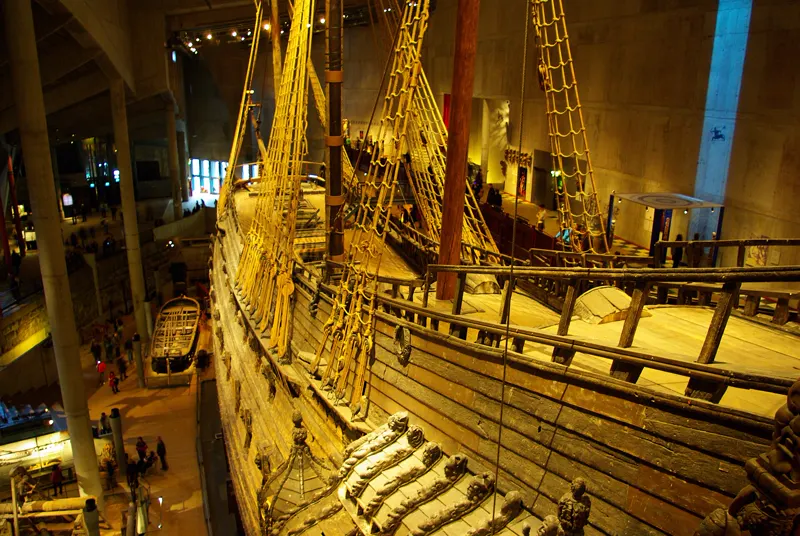
The museum is arranged so you can walk around the Vasa on several floors, from the bottom of the hull to the carved figures at the top of the stern.
Cities
A lot of canal houses tip forward a few centimeters. The builders planned it. The sideways lean is a different story.
Cities
In 2012, librarians moved hundreds of thousands of old manuscripts out of a city that was about to be taken.

Cities
Gustav Vigeland made more than two hundred sculptures for one park, and the city got all of them.

Cities
For decades, getting home in Medellín's Comuna 13 meant climbing the equivalent of a 28-story building. Then the city did something radical — it…