Wild
At 50 Below, This Horse Goes Out for Breakfast
Yakutian horses live outdoors all winter in one of the coldest inhabited places on Earth. Their ancestors arrived there not very long ago.

Wild
A Venus flytrap ignores the first touch. It waits, and it keeps score.
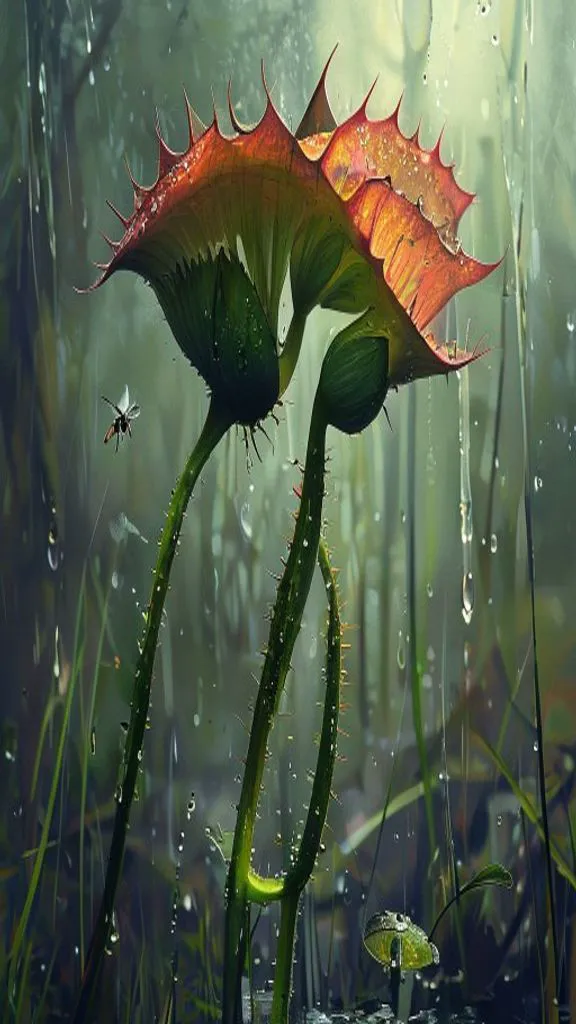
Try this in your head. A fly lands on a leaf, steps on one of the tiny hairs growing there, and nothing happens.
Not a thing. The leaf just sits open like a mouth, as if it hasn't noticed. The fly takes another step, touches a hair again, and SNAP. Both halves of the leaf slam shut in about a tenth of a second.
That's a Venus flytrap, and the strange part isn't the snap. It's the first touch, the one it ignores. A flytrap has no brain and no nerves, and yet it somehow knows the difference between one touch and two.
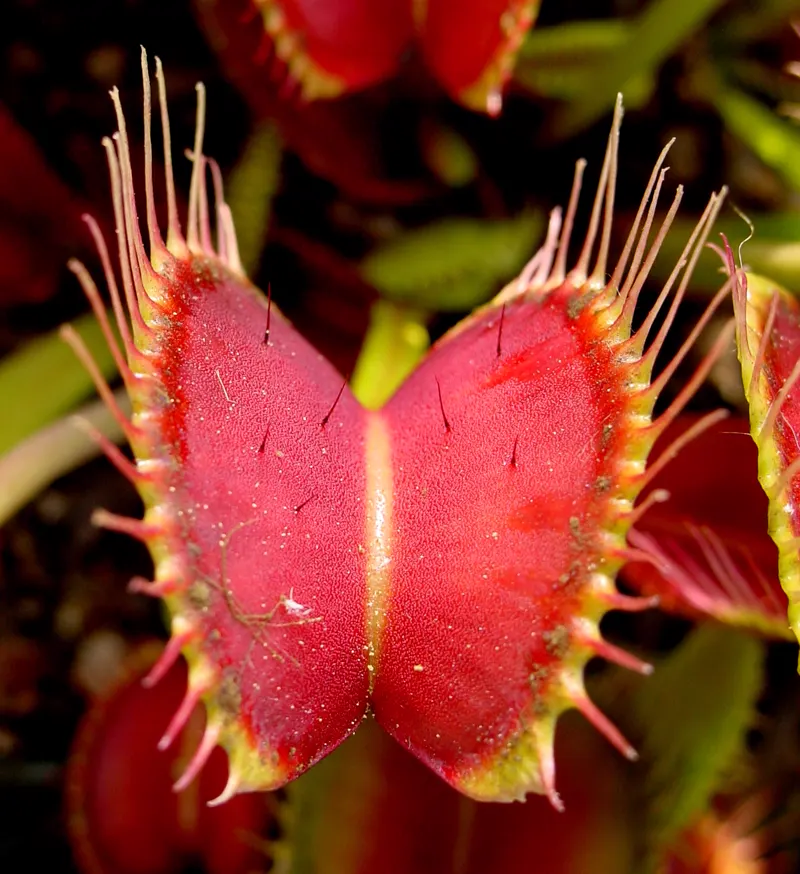
Each half of the leaf has a few of those hairs, usually three. They're the trigger. Scientists in Germany worked out how they work, and it's clever. Every time a hair is touched, the plant sends a small electrical signal through the leaf, and each signal makes calcium build up inside the trap's cells, a bit like water filling a cup. One touch isn't enough to fill it to the line. Two touches close together are, because the first one hasn't drained away yet. How close together? Within about twenty seconds. If you wait longer than that, the cup empties and the count starts over.
Why bother counting? Because snapping shut costs the plant a lot of energy. If one touch were enough, a raindrop, a speck of dust or a bit of falling leaf could set it off, and the plant would spend its whole summer closing on nothing. Two touches in a row means something is probably alive and moving around in there.
The counting doesn't stop at two. Once the trap is shut, the trapped insect wriggles, and every wriggle touches the hairs again. After about five signals, the plant starts making the juices that break the insect down. So the trap decides first whether there's anything there, and then whether it's worth the effort of eating it. A trap that closed on a false alarm will usually open again by itself, often within a day.
In the wild, Venus flytraps grow in only one small corner of the world: the coast of North Carolina and South Carolina in the United States. Nowhere else. They've become harder to find there, partly because people dig them up.
And a single trap can only snap shut a few times before that leaf wears out, which makes poking one on a windowsill, just to watch it close, a rather expensive joke for the plant.
Charles Darwin spent a lot of time with Venus flytraps and called it one of the most wonderful plants in the world. He could see that it somehow kept count. He never found out how. That took another hundred and forty years or so.
Wild
Yakutian horses live outdoors all winter in one of the coldest inhabited places on Earth. Their ancestors arrived there not very long ago.
Wild
Pando in Utah is a single clone, joined at the roots. How old it is nobody agrees.

Wild
The skin is dark. The hairs are see-through. Once, in a zoo, they turned green.

Wild
Researchers in Seattle wore a rubber mask to trap crows. Years later, the crows still scolded it.