Cultures
Seventeen Giant Stone Faces, and No Two Are the Same
The Olmec carved heads from basalt boulders carried across the jungle. Each face looks like a particular person.
Cultures
Traders carried goods across Asia in short legs. The name only appeared in 1877.
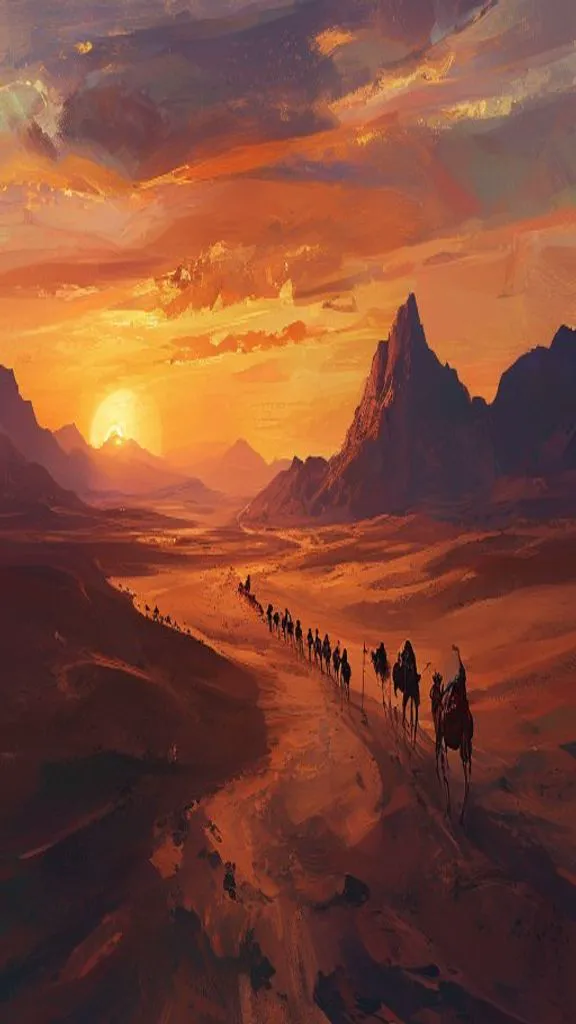
Quick question: how long was the Silk Road? The answer people usually give is about 6,400 kilometers. The real answer is a bit different, because hardly anyone ever traveled it from one end to the other.
It wasn't one road. It was a web of trails across Asia, winding through deserts, mountain passes and oasis towns, and it joined China to lands around the Mediterranean Sea. A trader in the east loaded his camels with goods and took them as far as the next big city. There he sold them, or swapped them, and somebody else carried them on. Goods changed hands again and again. By the time a bundle of silk reached Rome, it might have passed through dozens of people. Neither the first owner nor the last would have known the other existed.
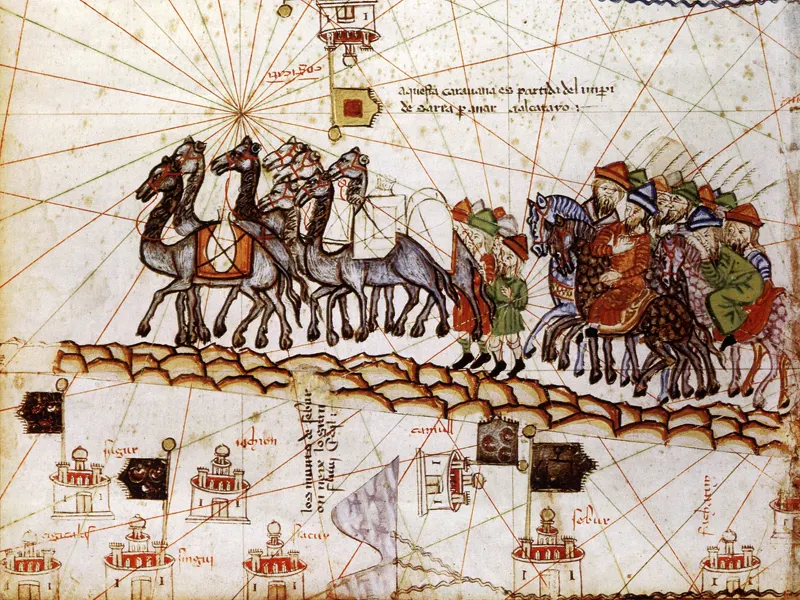
The people along the way didn't call it the Silk Road, either. The name is much newer. A German geographer named Ferdinand von Richthofen is usually credited with it. In 1877 he wrote about the "Seidenstrasse," the silk road, in a book about China. Some scholars have found earlier uses of the phrase, so he may not have been the very first. But his version caught on, and many historians now prefer to say "Silk Roads," with an s, because it was never one road. Ships carried the same goods between ports in China, India, Arabia and East Africa too, along what's called the maritime Silk Road.
Silk was the star of the name because it was precious. In the Roman world, people paid a lot for it, and China guarded the secret of how to make it for centuries. But it was never the only thing on the move. Going west, there were horses, furs, jade, tea, paper and porcelain. Going east, there were glass, gold, wine and spices. The old claim that the road carried "very little silk" is going too far. Silk was valuable, and it did move in quantity. It just wasn't the whole story.
What traveled best wasn't something you could pack in a bag. Ideas went along the road. Buddhism spread from India into China and onward, carried by monks and by merchants who paid for temples along the way. The knowledge of how to make paper moved west. So did stories, music, ways of building and cooking. Diseases also followed the trade routes, and many historians think the plague that swept Europe in the 1300s traveled along these routes.
The cities on the way grew rich. Samarkand, Kashgar and Dunhuang were meeting places where people who spoke many different languages did business, and where the traders' habits and their religions mixed.
Almost nobody saw the whole thing. A trader knew his own stretch of the route, the next town and the next buyer, and that was plenty to keep track of.
Cultures
The Olmec carved heads from basalt boulders carried across the jungle. Each face looks like a particular person.
Cultures
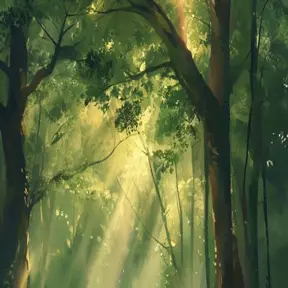
Shinrin-yoku is a Japanese idea: walk slowly among trees, on purpose, and notice things.
Cultures
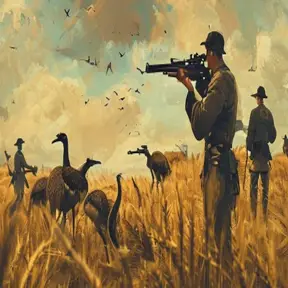
In 1932 the Australian army went out to deal with emus. The emus were still there when the soldiers left.
Cultures
Lapis lazuli traveled thousands of kilometers to reach Egypt, then Italy, and ended up in a lot of famous paintings.