_(Sar-e-Sang_Deposit,_Sakhi_Formation,_Precambrian,_2.4-2.7_Ga_(%3F);_Sar-e-Sang_Mining_District,_Hindu-Kush_Mountains,_Afghanistan)_2_(47087519601).jpg)
Cultures
Seventeen Giant Stone Faces, and No Two Are the Same
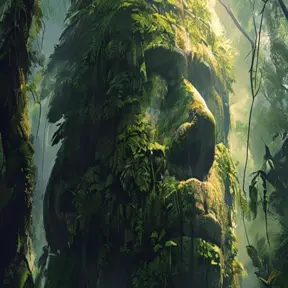
The Olmec carved heads from basalt boulders carried across the jungle. Each face looks like a particular person.
Cultures
Lapis lazuli traveled thousands of kilometers to reach Egypt, then Italy, and ended up in a lot of famous paintings.
Look at an old painting of the Virgin Mary and pay attention to her robe. If it's a deep, glowing blue, there's a decent chance that color started out in a valley in the mountains of Afghanistan.
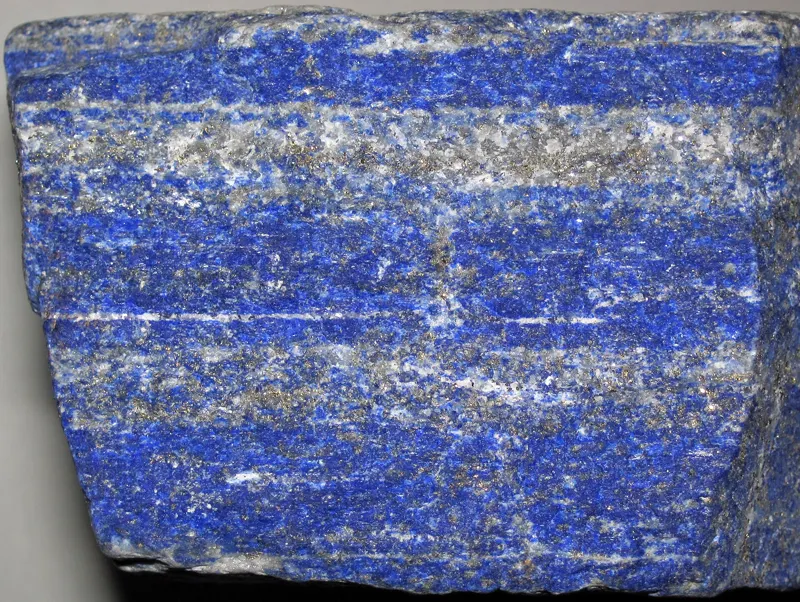
The blue comes from a stone called lapis lazuli. For thousands of years, nearly all of the world's best lapis came from one place, a valley called Sar-e-Sang in Badakhshan, in the northeast of the country. People were digging it out of those hills before most of the places we call ancient had any writing at all.
Egypt has plenty of sand and plenty of limestone and no lapis. The Egyptians wanted it badly anyway. So it came by caravan, handed from trader to trader across deserts and mountains, a journey of several thousand kilometers. Some of it ended up in the golden mask of the pharaoh Tutankhamun, where the dark blue stripes in the headdress are lapis lazuli and blue glass. Some went into royal graves in Mesopotamia, in the city of Ur, made into beads and jewelry.
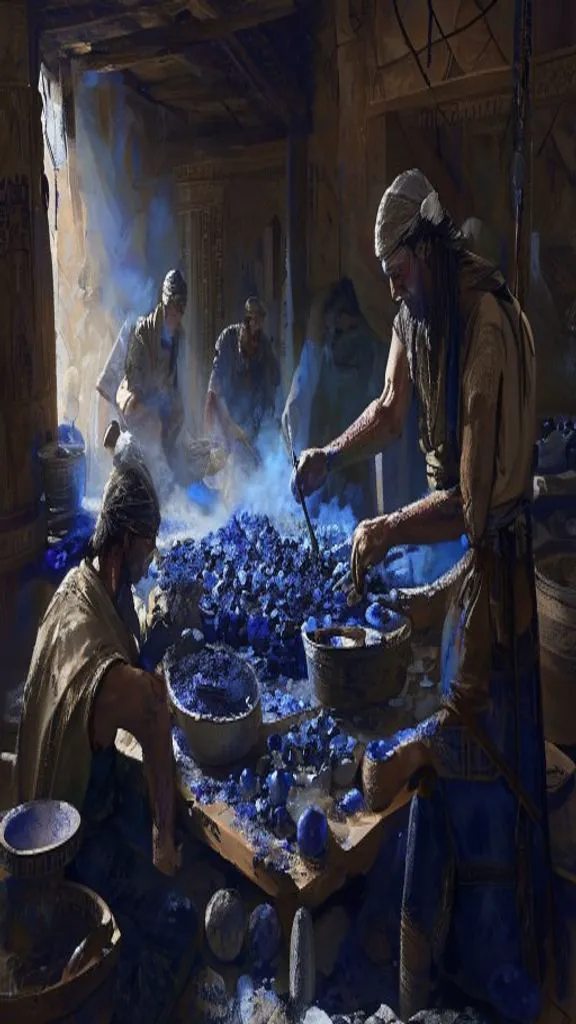
Somewhere along the way, someone realized you could grind the stone up and make paint from it. That's the part that changed things for artists. The paint is called ultramarine, a name that comes from Latin and means "beyond the sea," because in Europe it arrived from across the Mediterranean. Making it wasn't simple. You had to crush the stone, then wash and knead the powder for a long while to separate the blue from the gray bits. It was slow and fiddly, and the result was expensive.
How expensive? In Renaissance Italy, some contracts between painters and the people who paid them said exactly how much ultramarine the painter had to use, and where on the picture. The Virgin Mary's robe was a favorite spot, partly, historians think, because she was the most important figure in the painting and a rich buyer liked to see exactly where his money had gone. At times it was priced about like gold. The Dutch painter Johannes Vermeer used a lot of it too, and some of that blue is on the turban in his famous painting of a girl with a pearl earring.
Then, in the 1820s, chemists in France and Germany worked out how to make a very similar blue in a factory, from ordinary ingredients. The price crashed, and artists could suddenly afford it. A color that had been rare since before writing became something you could buy at the shop on the corner.
The stone itself didn't stop being precious, though. People still cut and polish it for jewelry. And people still dig it out at Sar-e-Sang today, in the same valley where the story starts.
Cultures
The Olmec carved heads from basalt boulders carried across the jungle. Each face looks like a particular person.
Cultures
Traders carried goods across Asia in short legs. The name only appeared in 1877.

Cultures
Shinrin-yoku is a Japanese idea: walk slowly among trees, on purpose, and notice things.

Cultures
In 1932 the Australian army went out to deal with emus. The emus were still there when the soldiers left.