Cultures
Seventeen Giant Stone Faces, and No Two Are the Same
The Olmec carved heads from basalt boulders carried across the jungle. Each face looks like a particular person.

Cultures
In 1932 the Australian army went out to deal with emus. The emus were still there when the soldiers left.
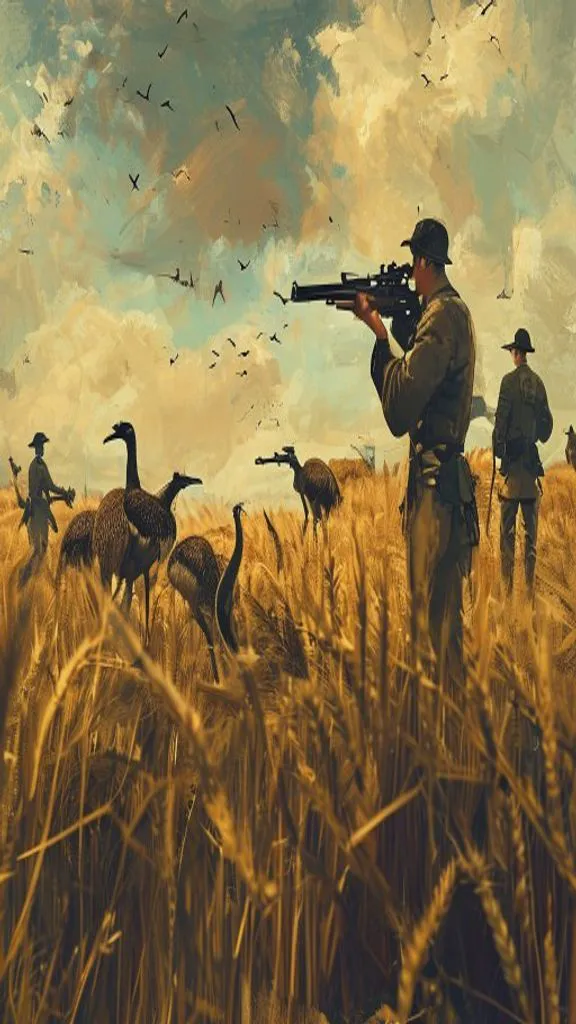
The soldiers went home first.
That's how it ended. In Western Australia, at the end of 1932, a small group of soldiers with machine guns packed up and left, and the emus they'd been sent to deal with stayed right where they were. The newspapers called the whole thing the Emu War. The name stuck, mostly as a joke, though the problem behind it was real.
To see how it got there, go back a few years. After the First World War, the Australian government gave pieces of farmland in dry parts of Western Australia to men who'd come home from the fighting. Many of them grew wheat. Then the Great Depression hit, the price of wheat fell, and farming got very hard. And then, in 1932, about twenty thousand emus, the usual number given, arrived in the farming district.
Emus are odd birds. They can't fly, and their wings are tiny. They're big, though. An adult can stand almost two meters tall and run at around fifty kilometers an hour. The father sits on the eggs for about eight weeks, and he hardly eats or drinks the whole time. When the breeding season was over, the emus moved inland, probably looking for water, and found fields. They trampled the wheat, ate it, and knocked down fences that rabbits could then get through. The farmers asked the government for help, and since many of them were veterans, they asked for soldiers and machine guns. The Minister of Defence agreed.
A major named Meredith was put in charge, with two Lewis guns, which are light machine guns, and about ten thousand rounds of ammunition. They set out in early November.
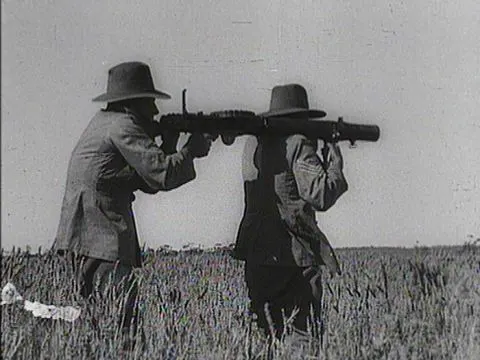
It didn't go well. The emus didn't stand together in one big flock where a gun would do the most good. They split into small groups and scattered, and they ran fast. The soldiers found they could hardly hit them, and the reports said a bird that was hit often wasn't stopped. After a few days the army had very little to show for its work, and the story had reached the newspapers and the politicians, who mocked it.
The soldiers were pulled out, then sent back briefly for another go. By the army's own account they killed around a thousand emus in the end, using nearly ten thousand rounds. That number is hard to be sure of. Either way it wasn't enough to solve anything, and the army went home.
What worked a little better later was much less dramatic: a bounty paid to local hunters for every emu they killed and, over time, better fencing.
Emus weren't wiped out, then or since. Today the emu is still a common bird across much of Australia, and it's the bird on the country's coat of arms, standing next to a kangaroo.
Cultures
The Olmec carved heads from basalt boulders carried across the jungle. Each face looks like a particular person.
Cultures
Traders carried goods across Asia in short legs. The name only appeared in 1877.

Cultures
Shinrin-yoku is a Japanese idea: walk slowly among trees, on purpose, and notice things.

Cultures
Lapis lazuli traveled thousands of kilometers to reach Egypt, then Italy, and ended up in a lot of famous paintings.