Wild
At 50 Below, This Horse Goes Out for Breakfast
Yakutian horses live outdoors all winter in one of the coldest inhabited places on Earth. Their ancestors arrived there not very long ago.

Wild
The pistol shrimp's claw never touches its prey. The sound does the work.
Bang.
That's roughly what it sounds like when a pistol shrimp snaps its claw. No gun, no bullet. Most of them are shorter than your finger.
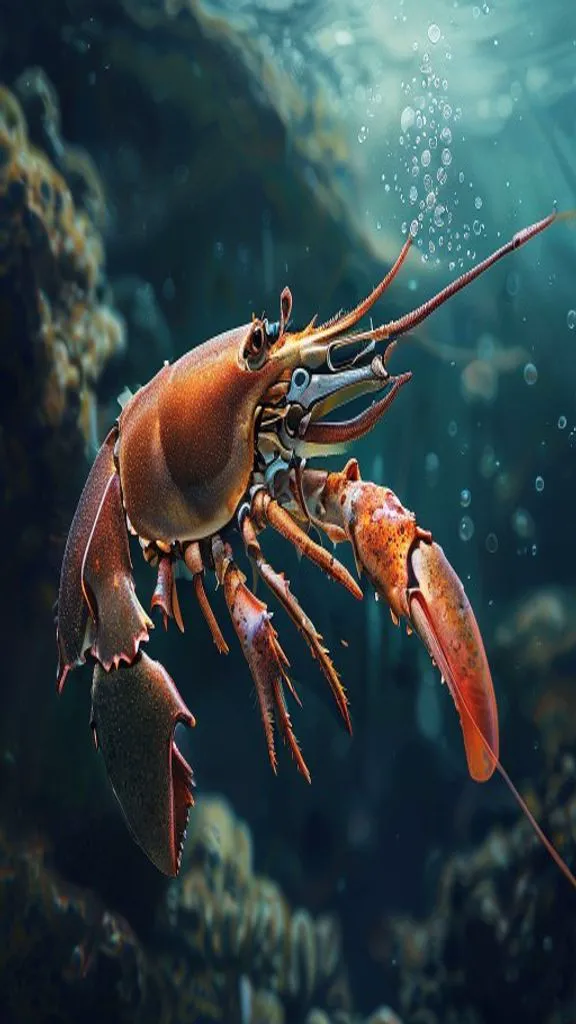
One of the shrimp's claws is much too big for the rest of it, as if it were borrowed from a bigger animal. The claw has a little peg on one half and a socket on the other. The shrimp cocks it wide open, holds it there, and then fires it shut, many times faster than a blink.
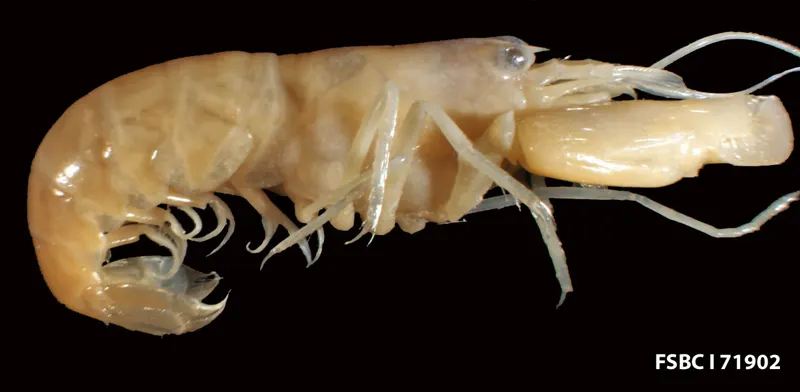
The odd bit is that the claw doesn't hit anything. What it does is squirt out a jet of water, reported to move at something like a hundred kilometers an hour, so fast that the water behind it can't keep up, and a bubble opens up in the gap. Not a bubble of air, really. More of an empty space the water hasn't had time to fill. That bubble can't last. It collapses almost at once, and the collapse is the bang. It's among the loudest sounds any animal makes, louder than a gunshot. A small fish or crab that swims too close can be stunned by it, and then the shrimp has dinner.
Then there's the light. When the bubble caves in, it gives off a tiny flash. You wouldn't see it. It's too faint and far too quick. Scientists caught it in 2001 with sensitive equipment, and the name that stuck is shrimpoluminescence, which is a real word, and a hard one to say quickly. For a split second the inside of that collapsing bubble gets extremely hot. Estimates put it somewhere near the temperature of the surface of the Sun.
You might think one shrimp can't make much noise. But they live in big groups, and in warm, shallow seas a whole colony snapping at once makes a nonstop crackle, a bit like bacon frying. The crackle is so constant that it got in the way of sonar. During the Second World War, navies reportedly found that their listeners could barely hear anything over it, and that a submarine could hide in the noise.
The snap isn't only for dinner. Pistol shrimp also seem to use it in squabbles with each other, over burrows and territory, so a patch of seabed with a few of them on it can be a surprisingly noisy neighborhood.
Some of them have a roommate. A number of pistol shrimp share a burrow with a small fish called a goby. The shrimp can hardly see, but it's the one that digs. The goby keeps watch, and the two stay in touch with the shrimp's long feelers resting against the fish. If the goby spots danger it flicks its tail, the shrimp feels it, and both of them dive into the burrow.
In a lot of warm, shallow seas, the loudest thing in the water isn't a whale or a ship. It's shrimp.
Wild
Yakutian horses live outdoors all winter in one of the coldest inhabited places on Earth. Their ancestors arrived there not very long ago.
Wild
Pando in Utah is a single clone, joined at the roots. How old it is nobody agrees.

Wild
The skin is dark. The hairs are see-through. Once, in a zoo, they turned green.

Wild
Researchers in Seattle wore a rubber mask to trap crows. Years later, the crows still scolded it.