Wild
At 50 Below, This Horse Goes Out for Breakfast
Yakutian horses live outdoors all winter in one of the coldest inhabited places on Earth. Their ancestors arrived there not very long ago.

Wild
It is the only animal known to do it. Scientists finally worked out how in 2018.
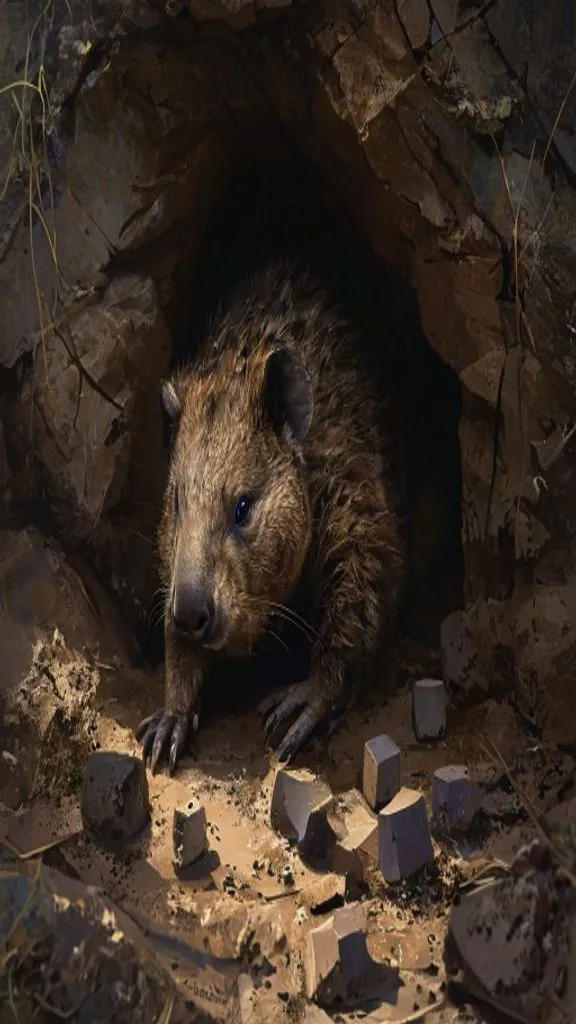
Try squeezing a cube out of a tube of toothpaste. Go on, think about it. It comes out round, a long worm, because the hole is round. Everything that comes out of a round hole comes out round.
Wombats don't seem to know that rule.
A wombat is a stocky, furry Australian animal that digs burrows and weighs about as much as a Labrador. Its pouch opens backward, so the dirt it digs up doesn't fly in and land on the baby, which is called a joey. And it's the only animal known to produce droppings shaped like cubes. Little ones, with flat sides and corners, as neat as dice. Nobody knew how.
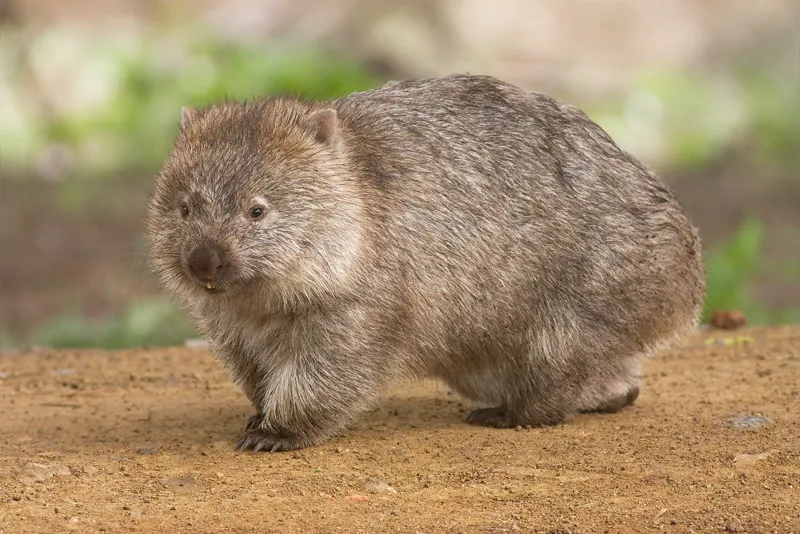
So, how?
In 2018, researchers at a university in the United States, Georgia Tech, decided to find out. They were the right people to ask, because the same team had already measured how long animals take to empty their bladders and found that almost every mammal bigger than a rat needs about the same twenty-one seconds or so, from a cat to an elephant.
For the wombat question, they got hold of the intestines of wombats that had died, after being hit by cars, and examined them closely. They tested how stretchy each part was. What they found was that the last stretch of the wombat's gut isn't the same all the way around. Some parts are stiff, some are stretchy, and the stiff and stretchy parts alternate. As the waste moves along, the stretchy parts bulge outward and the stiff parts don't, and bit by bit the stuff is pressed into corners. By the time it comes out, it's a cube.
A wombat can make a surprising number of them in one night, eighty to a hundred according to what's usually reported.
What are they for? The usual answer is that they're messages. Wombats are territorial, and they leave their droppings in prominent places, on top of rocks, logs and little mounds of earth, to tell other wombats whose patch this is. A round dropping would roll off. A cube stays where it's put. Nobody has run the experiment with round droppings to prove it, but it makes sense to the people who study wombats.
Something else probably helps. Wombats digest their food slowly, and what comes out is quite dry. Soft, wet stuff wouldn't hold a shape, and dry stuff does.
The scientists said they were interested for a reason that had nothing to do with wombats. Factories make things by squeezing soft materials into molds, and that takes a lot of equipment. A wombat does something close to the same job inside its own body, with no mold at all. The researchers wondered whether people could learn something from it about making cube-shaped objects another way.
So somewhere in Australia tonight a wombat is quietly solving a manufacturing problem, and then putting the answer on a log.
Wild
Yakutian horses live outdoors all winter in one of the coldest inhabited places on Earth. Their ancestors arrived there not very long ago.
Wild
Pando in Utah is a single clone, joined at the roots. How old it is nobody agrees.

Wild
The skin is dark. The hairs are see-through. Once, in a zoo, they turned green.
Wild
Researchers in Seattle wore a rubber mask to trap crows. Years later, the crows still scolded it.