Earth
Who Found Machu Picchu? A Farmer Walked Him There
In 1911 an American professor was led up the mountain by a local man. The families who lived there already knew the place.
Earth
Surtsey rose out of the sea off Iceland. Ever since, researchers have watched how life moves in.
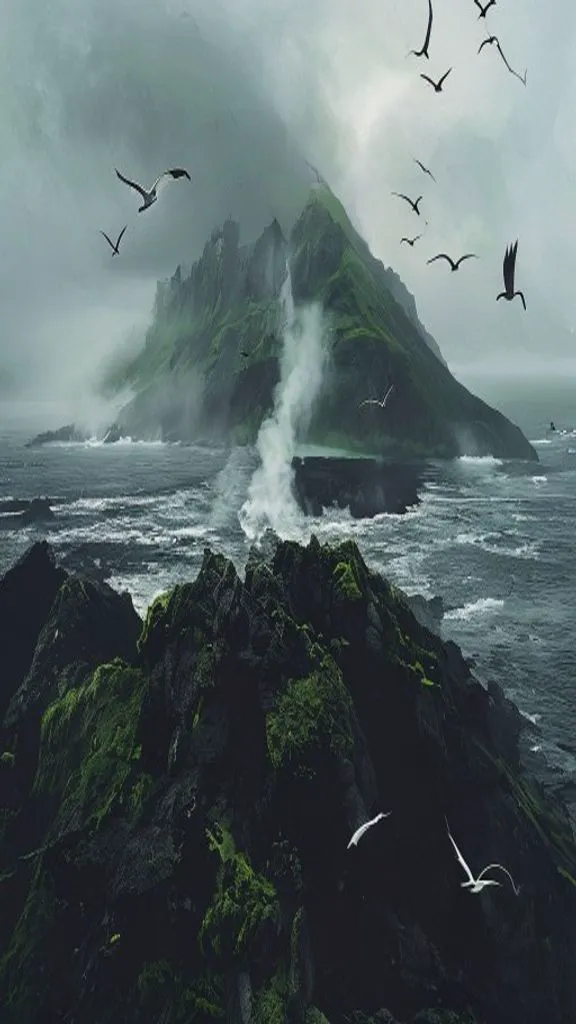
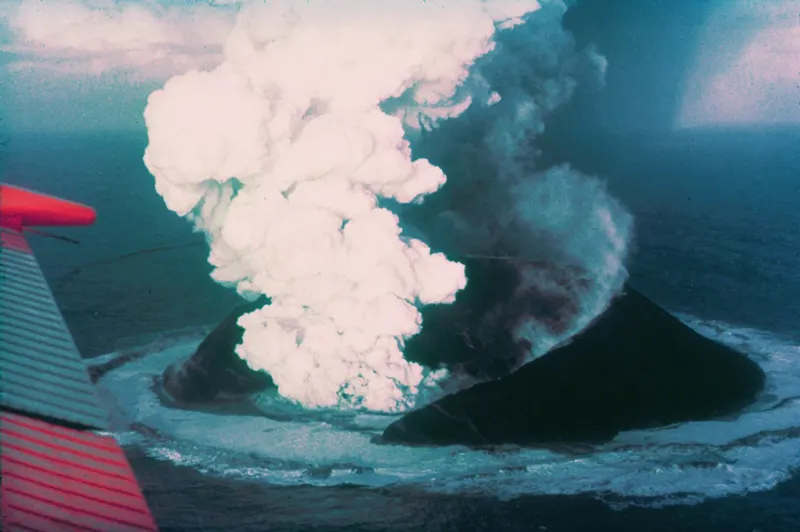
In November 1963, the crew of a fishing boat off the south coast of Iceland saw smoke rising out of the sea. They thought a ship was on fire.
It wasn't a ship. A volcano on the sea floor had been pushing up lava for days, and now the top of it was breaking the surface. The spot is about thirty kilometers from the coast. Within a few days there was new land. Within a few weeks there was an island. The eruption kept going, on and off, until 1967, and by the end the island was a couple of square kilometers of black rock and ash. The sea floor there is more than a hundred meters down, so the volcano first had to build a mountain under the water before anything showed at the surface. People named the island Surtsey, after Surtr, a fire giant in old Norse stories.
What made Surtsey special was a decision. Iceland decided to leave it completely alone. Almost nobody is allowed to land. Only scientists with permission can go, and they follow strict rules. Nobody builds, nobody plants, and nobody tidies up. Visitors are careful not to carry in seeds or insects on their boots and clothes. That makes it one big experiment: a piece of brand-new land, with no life on it at all, where you can watch what turns up and when.
The first plant showed up in the spring of 1965. It was a sea rocket, a tough little shore plant, and its seed had probably floated there on the waves. Birds brought more. Seeds stuck to their feet or came out in their droppings. When gulls started nesting on the island, their droppings fed the soil, and grass began to grow thick around the colony.
Not every visitor was welcome. Some boys from the nearby Westman Islands rowed over and planted potatoes. The scientists pulled them up. Then, in 1969, a researcher found a tomato plant about fifteen centimeters tall. It had grown out of human waste somebody had left behind, from tomato seeds that went through a person and came out the other end still alive. That plant got pulled up too. The whole point was to let nature do the delivering.
Today there are mosses, flowers, insects, seabirds and seals, and the number of kinds of plants has kept climbing. There's one small hut with a few bunk beds for the researchers. The waves keep nibbling at the island, and it's smaller now than it was at its biggest. They wash the loose ash away much faster than the hard lava, so the shape of the island keeps changing. In 2008 UNESCO put Surtsey on its World Heritage list, and the rule that nobody lands without permission stayed.
Earth
In 1911 an American professor was led up the mountain by a local man. The families who lived there already knew the place.
Earth
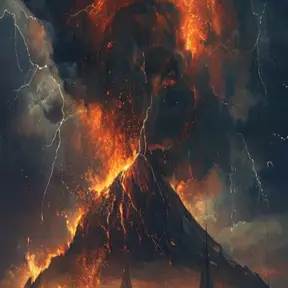
In 1883 a volcano in Indonesia blew up. The bang crossed the Indian Ocean, and the pressure wave went around the world.
Earth
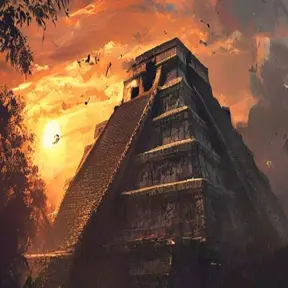
A Maya pyramid in Mexico seems to hold a snake made of shadow and a bird made of echoes. Nobody knows whether that was planned.
Earth
In 1991 a man in Vietnam found a cave by its sound. It has its own river, its own weather and its own jungle.