Earth
Who Found Machu Picchu? A Farmer Walked Him There
In 1911 an American professor was led up the mountain by a local man. The families who lived there already knew the place.
Earth
In 1991 a man in Vietnam found a cave by its sound. It has its own river, its own weather and its own jungle.
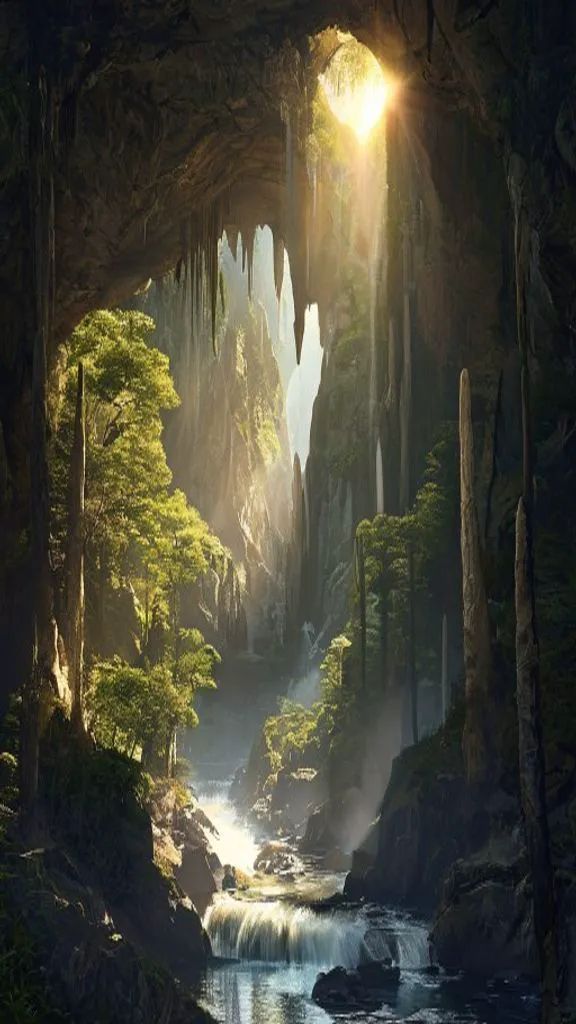
The first clue was a sound: a rushing, hissing noise coming from the side of a mountain, with cold air blowing out of it.
A man named Ho Khanh heard it in 1991, in the jungle of Quang Binh province, in central Vietnam, not far from the border with Laos. He was a local, and he knew the forest well. This was an opening in the rock he'd never seen before, at the bottom of a cliff, and the sound was loud enough to be scary. He didn't go in. He worked out that a river was running somewhere inside, and he knew he'd found something big. Then he lost it. The jungle there is thick, and it took years before he found the way back.
The people who lived nearby avoided the spot, because the whistling sound scared them. In 2009 Ho Khanh led a team of British cave explorers to it, headed by a man named Howard Limbert. They called it Hang Son Doong, which means "mountain river cave." What they found when they got inside was beyond anything they had expected.
The main passage is about 200 meters high and 150 meters wide, and it stretches for several kilometers. A 40-story skyscraper would fit inside the biggest part. It's usually called the biggest cave passage in the world. That's not the same as the longest cave: Mammoth Cave in Kentucky has hundreds of kilometers of tunnels, far more than Son Doong. But for sheer size of a single passage, nothing has been found to beat it. And the cave may be even bigger than the numbers say, because as of 2012 it still hadn't been fully surveyed.
There's a stranger part. In two places, long ago, the roof collapsed, leaving wide holes open to the sky. Sunlight pours down through them, and plants have taken over below, so there's a jungle growing inside the cave, with trees that reach toward the light. Near the roof, wisps of cloud have been seen. The cave makes its own weather.
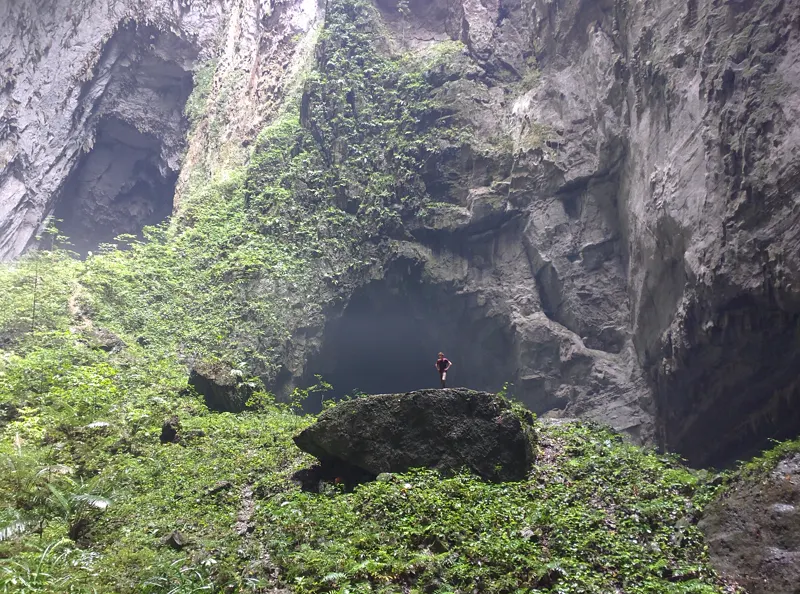
A river runs through the dark. Explorers have to wade, swim and climb. The cave has formations too: stalagmites up to about seventy meters tall, and pale round rocks called cave pearls. The cave also ends, in one place, at a wall of calcite so high that the first explorers named it the Great Wall of Vietnam.
The cave lies inside Phong Nha-Ke Bang National Park, a UNESCO World Heritage site. Today, only a small number of visitors are let in each year. They have to be fit, they go with guides, and they have to camp inside for several days.
A cave that size was found because one man stopped and listened to a strange noise.
Earth
In 1911 an American professor was led up the mountain by a local man. The families who lived there already knew the place.
Earth
In 1883 a volcano in Indonesia blew up. The bang crossed the Indian Ocean, and the pressure wave went around the world.
Earth
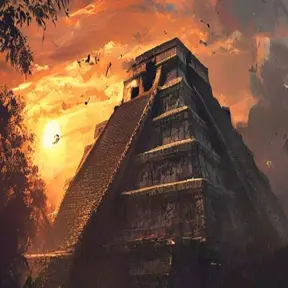
A Maya pyramid in Mexico seems to hold a snake made of shadow and a bird made of echoes. Nobody knows whether that was planned.
Earth
Lake Baikal is the deepest lake on Earth. It holds about a fifth of the planet's unfrozen fresh water, and a seal lives in it.