Earth
Who Found Machu Picchu? A Farmer Walked Him There
In 1911 an American professor was led up the mountain by a local man. The families who lived there already knew the place.

Earth
In 1967 a student noticed a radio signal that ticked like a clock. It was a neutron star.
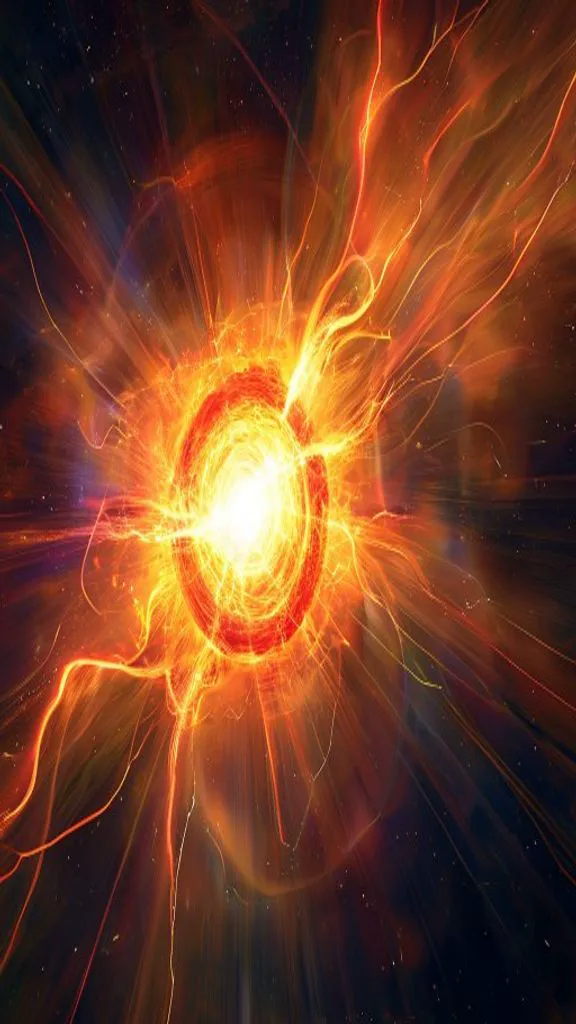
In 1967, a graduate student in England named Jocelyn Bell noticed something odd on the long paper strips coming out of a radio telescope. A tiny blip, repeating. It came again and again, once every one and a third seconds, as steady as a clock. She spotted it as a bit of scruff on the paper, one that wouldn't go away.
The telescope was a field full of poles and wires, spread over a few acres of English countryside. Nothing in the sky was supposed to tick like that. For a little while the team couldn't rule out that it might be a signal from somebody, and they half-jokingly labeled it LGM-1, short for Little Green Men.
It wasn't aliens. It was a neutron star, something people had only imagined until then, and nobody had ever seen one before.
To explain how a star could tick, start with what a neutron star is. When a very big star runs out of fuel, its core collapses and the outer layers are blasted away in an explosion called a supernova. What's left is the core, squeezed so hard that all of its stuff is packed together. A neutron star holds more mass than our Sun, around one and a half times as much, in a ball only about twenty kilometers across. That's about the size of a city.
It's so dense that a teaspoon of it would weigh roughly a billion tonnes.
Now add spin. Like a skater pulling in their arms, a collapsing star spins faster as it shrinks. A neutron star starts out spinning quickly, and a lot of them are still spinning when we find them. They also have strong magnetic fields, and from their magnetic poles they send out narrow beams of radiation. If the star is tilted just right, one of those beams sweeps across the Earth every time it turns, like the light of a lighthouse. We see a flash, then nothing, then a flash. That's a pulsar, and that's what Bell's telescope was picking up.
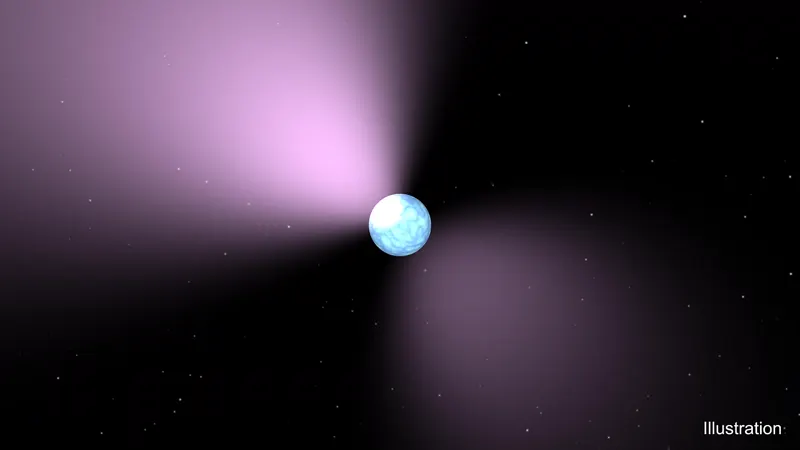
Some pulsars spin slowly. Bell's blinks about once every second and a third. Others spin far faster. The fastest one anyone has found so far turns about 716 times every second. That's faster than the blades in a typical kitchen blender, though a blender is spinning something a good deal lighter. At the star's surface, the speed is a large fraction of the speed of light, roughly a quarter, according to some estimates.
You might wonder why it doesn't fly apart. The answer is gravity, which is enormously strong on something that dense. It holds the star together, even at that speed.
And the first pulsar, the one that started all this? As far as anyone can tell it's still ticking, every one and a third seconds, more than fifty years later.
Earth
In 1911 an American professor was led up the mountain by a local man. The families who lived there already knew the place.
Earth
In 1883 a volcano in Indonesia blew up. The bang crossed the Indian Ocean, and the pressure wave went around the world.

Earth
A Maya pyramid in Mexico seems to hold a snake made of shadow and a bird made of echoes. Nobody knows whether that was planned.

Earth
In 1991 a man in Vietnam found a cave by its sound. It has its own river, its own weather and its own jungle.