Earth
Who Found Machu Picchu? A Farmer Walked Him There
In 1911 an American professor was led up the mountain by a local man. The families who lived there already knew the place.
Earth
Nauru is the world's smallest island nation. Its middle is missing, and the reason is under the ground.
What's the capital of Nauru?
Nobody has a tidy answer, because officially there isn't one. The government works out of a place called Yaren, and everyone has agreed that Yaren will do. Fewer than a thousand people live there.
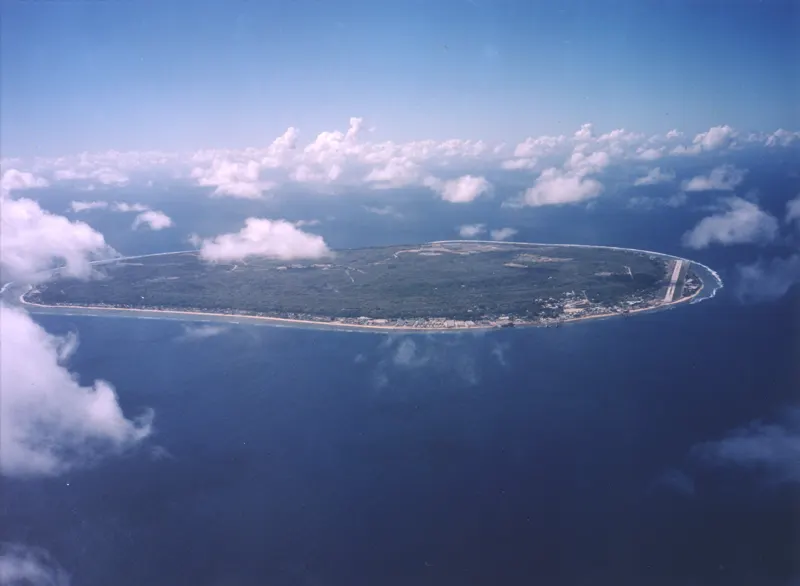
Nauru is a small island in the Pacific, just south of the equator, about 21 square kilometers in all. That makes it the smallest island nation in the world. Only two countries anywhere are smaller, the Vatican and Monaco, and neither of those is an island. The nearest other island is hundreds of kilometers of open sea away, and about ten thousand people live on Nauru.
There's one road, and it goes around the edge. It's roughly nineteen kilometers long, so if you set off after breakfast at a normal walking pace you'd be back before the afternoon was over.
Why does the road go around the edge and not across the middle? Because the middle is a mess.
In the early 1900s, miners found that the inside of the island was packed with phosphate rock. Farmers all over the world use phosphate to feed their crops, so it was worth a lot of money. Much of it is thought to have come from seabirds and sea life, piled up over an extremely long stretch of time. Digging began, and ships carried the rock off to farms far away, many of them in Australia and New Zealand. For decades, the mining was run by outsiders and not by the people who lived there.
Digging out phosphate means digging out the soil on top of it first. What was left behind is a rough, jagged landscape of gray limestone spikes. People usually say that about four-fifths of the island ended up like that, and hardly anybody lives on it. The houses, the shops, the airport and the government offices all squeeze into a narrow strip near the sea.
Nauru became independent in 1968 and soon took over the mining itself. For some years the money made it one of the wealthiest countries in the world, counted per person. That didn't last. By the 1990s a lot of the easy phosphate was gone, and the country had to work out what to do next with much less money and much less land.
That part of the story isn't finished. Nauru is still looking for other ways to earn a living and, slowly, for ways to repair some of the ground that was dug up.
So when someone asks you for the smallest country in the world, say the Vatican. If they ask for the smallest island country, say Nauru. And if they ask you for its capital, tell them to hold on, because it's a longer story, and it starts with birds.
Earth
In 1911 an American professor was led up the mountain by a local man. The families who lived there already knew the place.
Earth
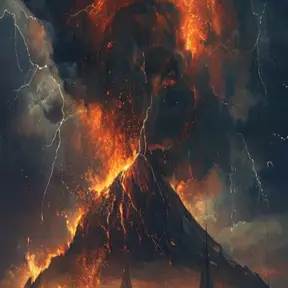
In 1883 a volcano in Indonesia blew up. The bang crossed the Indian Ocean, and the pressure wave went around the world.
Earth
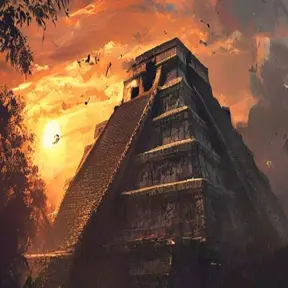
A Maya pyramid in Mexico seems to hold a snake made of shadow and a bird made of echoes. Nobody knows whether that was planned.
Earth
In 1991 a man in Vietnam found a cave by its sound. It has its own river, its own weather and its own jungle.