Earth
Who Found Machu Picchu? A Farmer Walked Him There
In 1911 an American professor was led up the mountain by a local man. The families who lived there already knew the place.
Earth
Mosquito Bay glows blue because of microscopic creatures that flash when something disturbs the water.
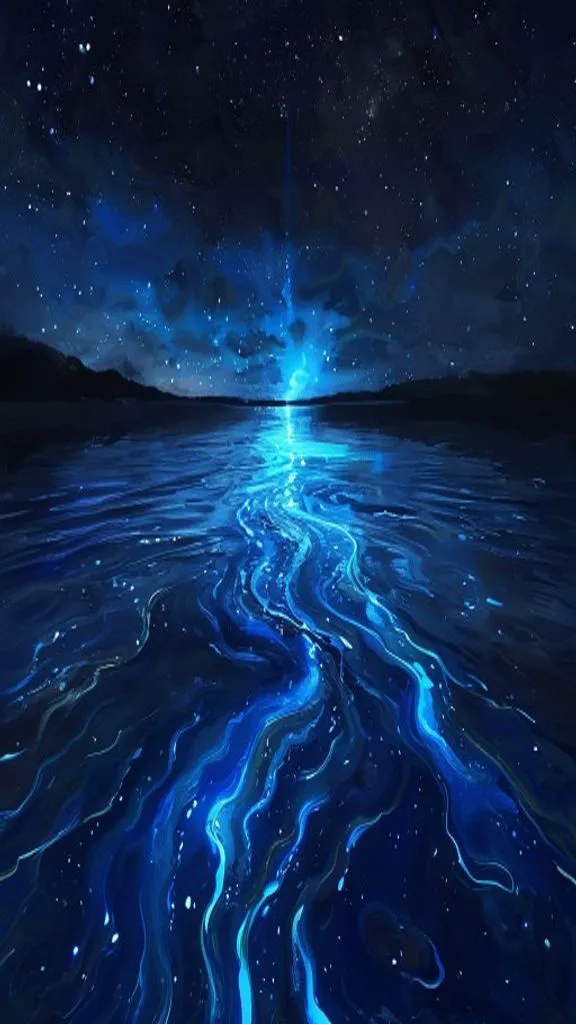
Because you poked it. That's the whole answer to why the water glows.
Mosquito Bay is on Vieques, a small island off the east coast of Puerto Rico. If you go there on a dark night and dip your hand in the water, your fingers come out trailing blue light. Move your paddle and the paddle glows. A fish swims past and leaves a streak behind it, like a pencil line.
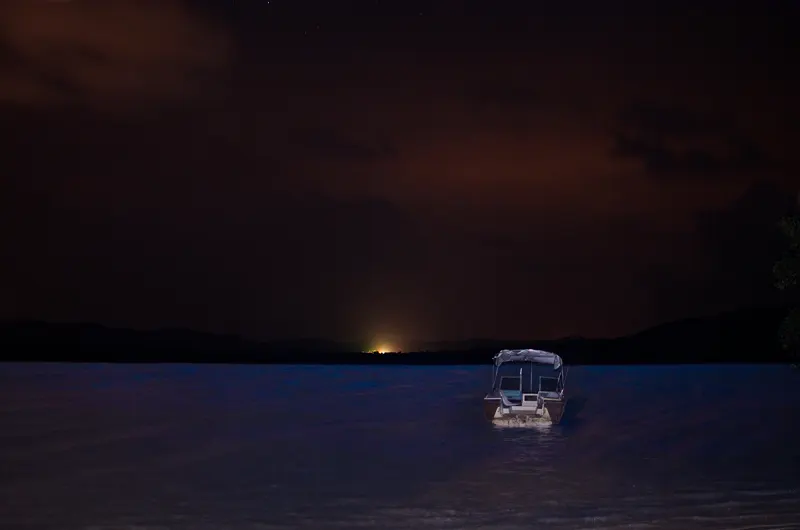
The light comes from tiny living things called dinoflagellates. The name comes from a Greek word for whirling, because most of them spin through the water using two little whip-like tails. They're single cells, much too small to see one at a time, and they're not quite plants or animals. Light made by living things is called bioluminescence, and fireflies and some deep-sea fish do it too. When one of these cells gets bumped, a chemical reaction inside it makes a quick flash of blue-green light. One cell makes a flash too faint to notice. But a bay can hold a very large number of them, hundreds of thousands in every gallon of water by some counts, and when millions get bumped at once, the whole water lights up.
This bay has been called one of the brightest of its kind in the world, and Guinness World Records named it the brightest in 2008.
Why do the cells do it? Scientists aren't completely sure. One idea is that the flash startles a small animal that's about to eat the cell. Another is that it works like a burglar alarm: the light shows up the attacker, and a bigger animal that likes to eat that attacker might come along. Whichever it is, you can't ask a dinoflagellate.
The bay seems to be the right shape for them, too. It has a narrow mouth, so the water doesn't wash in and out quickly and the cells don't get swept away. It's also surrounded by mangrove trees, which scientists think help by feeding the water something the cells need to grow. It's a bit like a fish tank with a lid that has one small hole in it.
To protect the glow, gas engines aren't allowed on the bay. People go out in kayaks, or in electric boats, and they go at night. The best time is when there's no moon, since moonlight washes out the glow. A bright full moon can make the trip pointless.
Your eyes help, too. It takes a few minutes in the dark before they adjust enough to see the faintest light, which is why people on the tours are asked to put their phones away.
In 2017, Hurricane Maria hit Puerto Rico, and the glow in the bay dimmed. It took some months to come back.
Earth
In 1911 an American professor was led up the mountain by a local man. The families who lived there already knew the place.
Earth
In 1883 a volcano in Indonesia blew up. The bang crossed the Indian Ocean, and the pressure wave went around the world.

Earth
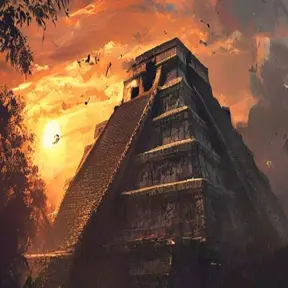
A Maya pyramid in Mexico seems to hold a snake made of shadow and a bird made of echoes. Nobody knows whether that was planned.
Earth
In 1991 a man in Vietnam found a cave by its sound. It has its own river, its own weather and its own jungle.