Earth
Who Found Machu Picchu? A Farmer Walked Him There
In 1911 an American professor was led up the mountain by a local man. The families who lived there already knew the place.

Earth
Nobody has counted either pile. Here is how people guessed, and which way the guesses lean.
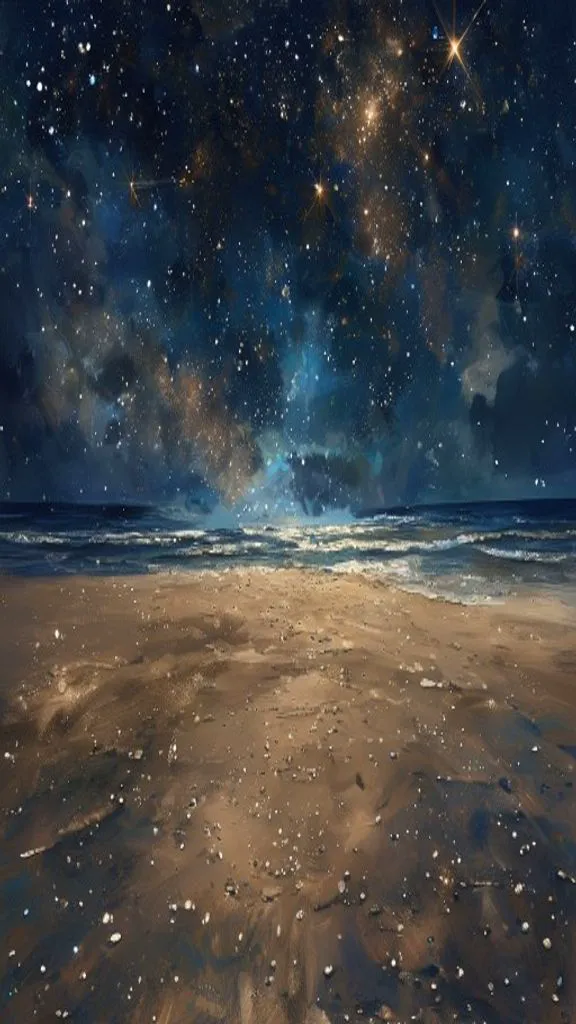
Short answer: probably yes. Longer answer: nobody has counted, so everything here is a guess. But the people doing the guessing are good at it, and they mostly end up on the same side.
Start with the sand, because it's the easier pile. Not easy. Easier.
To guess how many grains of sand there are, you need to know how big a grain is, how many fit in a cup, how long all the beaches in the world are, and how deep the sand goes. Then you multiply. A well-known version of this sum, from researchers in Hawaii, came out at about seven and a half quintillion grains on Earth's beaches. That's a 75 with seventeen zeros after it.
Now the stars. Our own galaxy, the Milky Way, has somewhere between a hundred billion and four hundred billion stars in it. Nobody counts them one by one, because most of them are hidden behind other stars and clouds of dust. Astronomers count what they can in a small patch of sky, work out how many such patches there are, and multiply. Then they do the same sort of thing for the galaxies. There are hundreds of billions of those, maybe more, depending on who you ask.
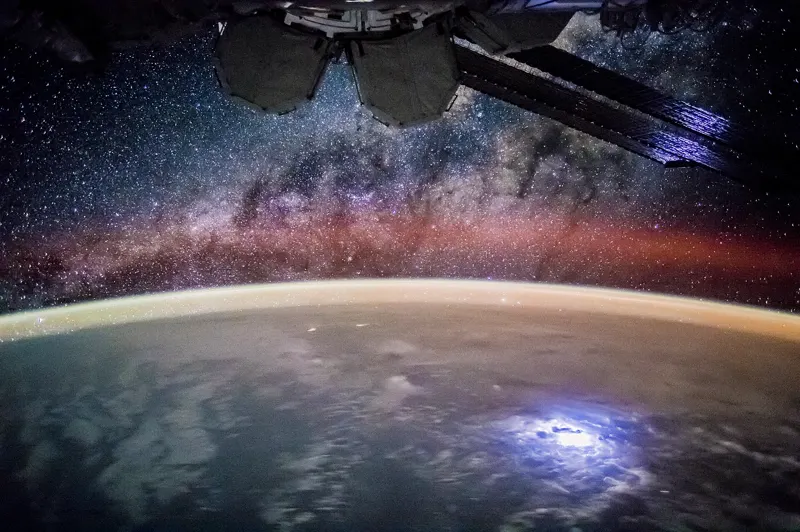
A guess that gets quoted a lot, from Australian astronomers in 2003, is seventy sextillion stars in the part of the universe we can see. That's a 7 followed by 22 zeros.
If you divide the stars by the sand, which you can do on any phone, you get roughly nine thousand stars for every grain. Both numbers are estimates, so don't hold on to that too tightly. It could be a bit more or a bit less. But it isn't a close race.
There are two catches. The first is that the star number only counts the part of the universe whose light has had time to reach us, which is called the observable universe. There's probably more beyond it, and nobody can say how much. The second is that the sand number only counts beaches. Add all the deserts and the sand pile gets much bigger, and then people start arguing about whether the stars still win. That's why you'll see this fact written a few different ways.
So why does it feel so strange? Because no human brain is built for numbers like these. A thousand is easy. A million you can sort of picture. After about a billion, everything turns into "a lot." That's true for everybody, scientists included. They just have better tools for keeping track.
And the stars you can see yourself? On a really dark night, with no moon and no town lights, you can see about two or three thousand at a time with your eyes alone. The rest are out there anyway, whether anyone's looking or not.
Earth
In 1911 an American professor was led up the mountain by a local man. The families who lived there already knew the place.
Earth
In 1883 a volcano in Indonesia blew up. The bang crossed the Indian Ocean, and the pressure wave went around the world.

Earth
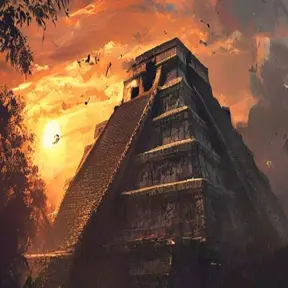
A Maya pyramid in Mexico seems to hold a snake made of shadow and a bird made of echoes. Nobody knows whether that was planned.
Earth
In 1991 a man in Vietnam found a cave by its sound. It has its own river, its own weather and its own jungle.