Earth
Who Found Machu Picchu? A Farmer Walked Him There
In 1911 an American professor was led up the mountain by a local man. The families who lived there already knew the place.
Earth
The old stories of Rapa Nui say the moai walked. An experiment in 2012 suggests they really could.
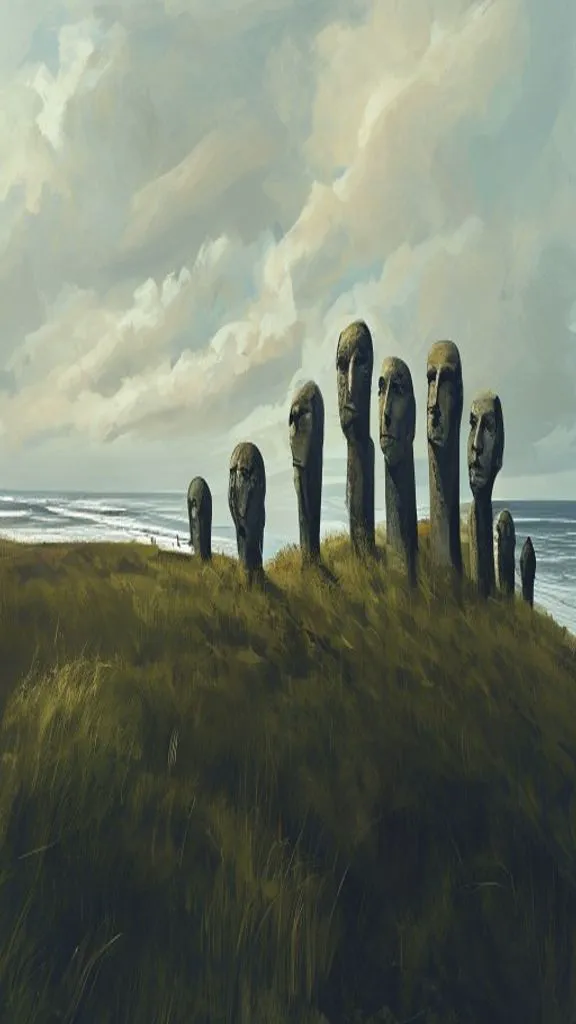
Ask people on Easter Island how the big stone statues got from the quarry to the coast, and you'll hear that they walked.
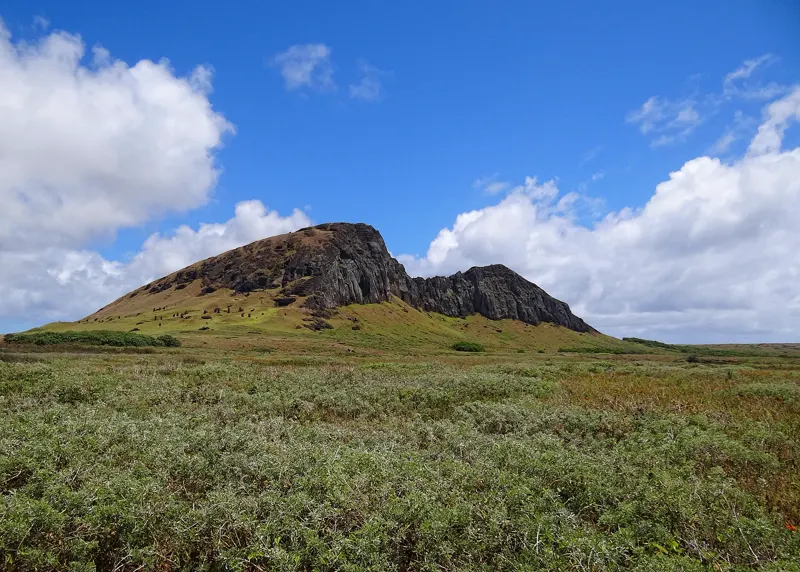
The island is called Rapa Nui by the people who live there, and it sits about 3,500 kilometers off the coast of Chile. The first European to reach it, a Dutch captain, arrived on Easter Sunday in 1722, and that's how it got its other name. The statues are called moai. There are nearly a thousand of them, most carved from soft volcanic rock in one big quarry on the side of a crater called Rano Raraku. Some are as small as a person. The average is around four meters tall, and the biggest ones are well over ten.
Moving a statue like that was the hard part. For years, people guessed the islanders used logs as rollers, or sleds. But Rapa Nui stories always said the moai "walked." In 2012, two researchers, Terry Hunt and Carl Lipo, decided to try it. They made a concrete copy of a moai, about five tons, and attached ropes. Three teams, one at each side and one at the back, pulled and rocked it, so it swung forward from one corner of its base to the other. With about eighteen people it moved a few hundred meters without falling over. That worked, and the moai really did seem to walk.
Another clue came from the old roads. Statues that were left on the roads between the quarry and the coast, probably when they fell over, are shaped differently from the ones on platforms. Their bellies lean forward, and their bases are wide and D-shaped, which fits a statue made for rocking.
Here are a few more things about moai.
Most of them have bodies. The famous heads you see in photos at the quarry are the tops of statues buried up to the shoulders by soil. When archaeologists dug some out, they found full bodies, some with carved patterns on their backs.
They had eyes. In the 1970s a piece of white coral turned up near a beach, and it turned out to be part of an eye. Finished moai had coral whites and dark centers set into their sockets.
They look inland. Most of the platforms face the villages, not the sea, so the statues watched over the people. A few, at a place called Ahu Akivi, are the exception: seven moai that look out over the ocean.
Some wear hats. Red stone topknots, called pukao, sit on a number of them. They were cut from a different, reddish volcanic rock from another crater, and each one weighs several tons.
The old story had been right all along, and it took eighteen people and three ropes to show it.
Earth
In 1911 an American professor was led up the mountain by a local man. The families who lived there already knew the place.
Earth
In 1883 a volcano in Indonesia blew up. The bang crossed the Indian Ocean, and the pressure wave went around the world.

Earth
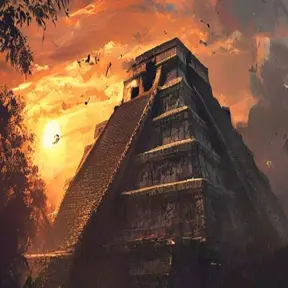
A Maya pyramid in Mexico seems to hold a snake made of shadow and a bird made of echoes. Nobody knows whether that was planned.
Earth
In 1991 a man in Vietnam found a cave by its sound. It has its own river, its own weather and its own jungle.