Earth
Who Found Machu Picchu? A Farmer Walked Him There
In 1911 an American professor was led up the mountain by a local man. The families who lived there already knew the place.
Earth
Iguazu is 275 waterfalls, not one, and some birds nest right behind them.
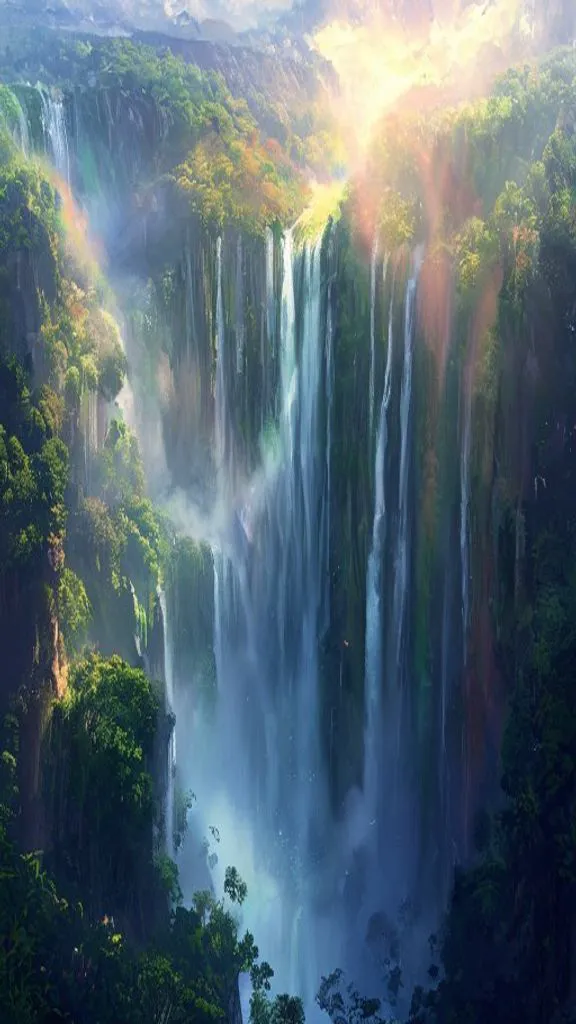
Some birds in South America nest on the cliff behind a waterfall. To get home, they fly straight through it.
The waterfall is Iguazu, and calling it a waterfall is a little misleading, because it's really a whole wall of them. It sits on the border between Argentina and Brazil. Depending on how much rain has fallen, the river breaks into somewhere around 275 separate drops. When the river is low you can count fewer. When it's flooding, some of the gaps fill in and a few of the falls merge into one.
The whole line of drops is close to three kilometers wide. That's wider than Victoria Falls in Africa. It's also taller than Niagara, which drops about fifty meters. At Iguazu the tallest drops are around eighty.
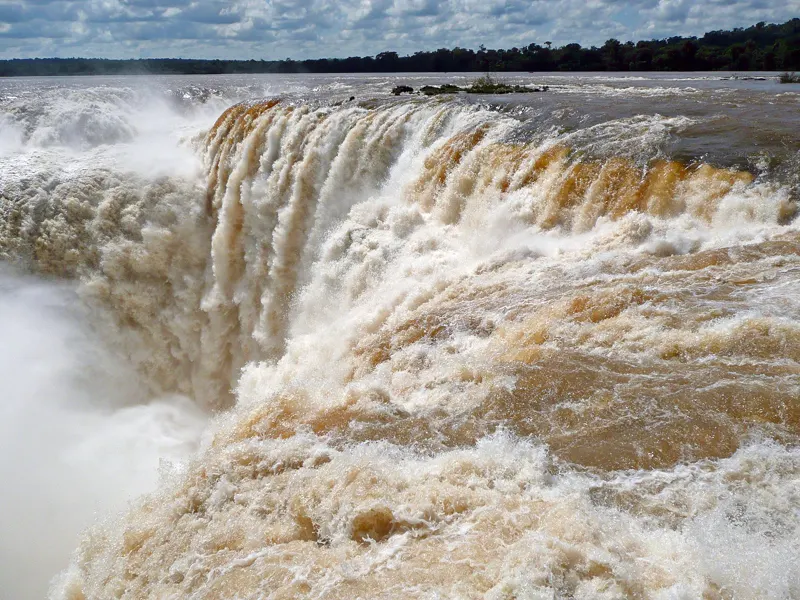
The biggest piece has a name: the Devil's Throat. It's a U-shaped gap in the cliff where a lot of the river pours over the edge from three sides at once, into a pit so full of spray that you can't see the bottom of it. The roar goes on all day, and the mist rises in a cloud you can sometimes see from far away.
The name Iguazu comes from the Guaraní language, from words that mean something like "big water." The Guaraní people lived there long before anyone put the place on a map.
Two countries share the falls, and each side feels different. Both are national parks, and both are World Heritage Sites. People often say the Argentine side lets you walk right out over the top of the falls on metal walkways, so you're standing above the water as it goes over. The Brazilian side gives you the wide view from a bit farther back, where you can see the whole curve of the falls at once. A short way downstream there's a spot where Argentina, Brazil and Paraguay all meet at the same river junction.
The falls sit inside a big patch of subtropical rainforest, with toucans, butterflies and, if you're very lucky and very quiet, the occasional jaguar. Not everyone who lives there is a bird behind a waterfall. There are coatis, which look like a cross between a raccoon and an anteater, with long ringed tails and long noses, and they're famous for stealing snacks out of people's bags. Visitors get told not to feed them. People don't always listen. Neither, as far as anyone can tell, do the coatis.
Now the birds. They're called great dusky swifts, quick, narrow-winged, dark birds that spend nearly all their lives in the air. At Iguazu they dive through the falling water to reach small ledges on the rock behind it. Nobody is entirely sure why that spot suits them so well. It may keep their nests safe from animals that can't get through the water.
Earth
In 1911 an American professor was led up the mountain by a local man. The families who lived there already knew the place.
Earth
In 1883 a volcano in Indonesia blew up. The bang crossed the Indian Ocean, and the pressure wave went around the world.
Earth
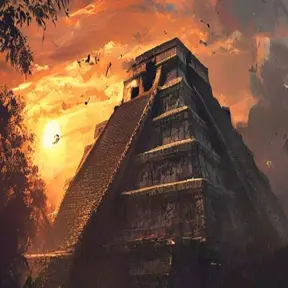
A Maya pyramid in Mexico seems to hold a snake made of shadow and a bird made of echoes. Nobody knows whether that was planned.
Earth
In 1991 a man in Vietnam found a cave by its sound. It has its own river, its own weather and its own jungle.