Earth
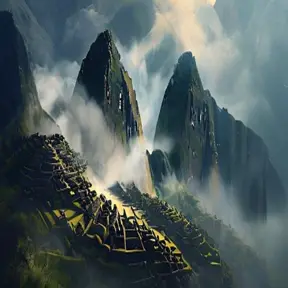
Who Found Machu Picchu? A Farmer Walked Him There
In 1911 an American professor was led up the mountain by a local man. The families who lived there already knew the place.
Earth
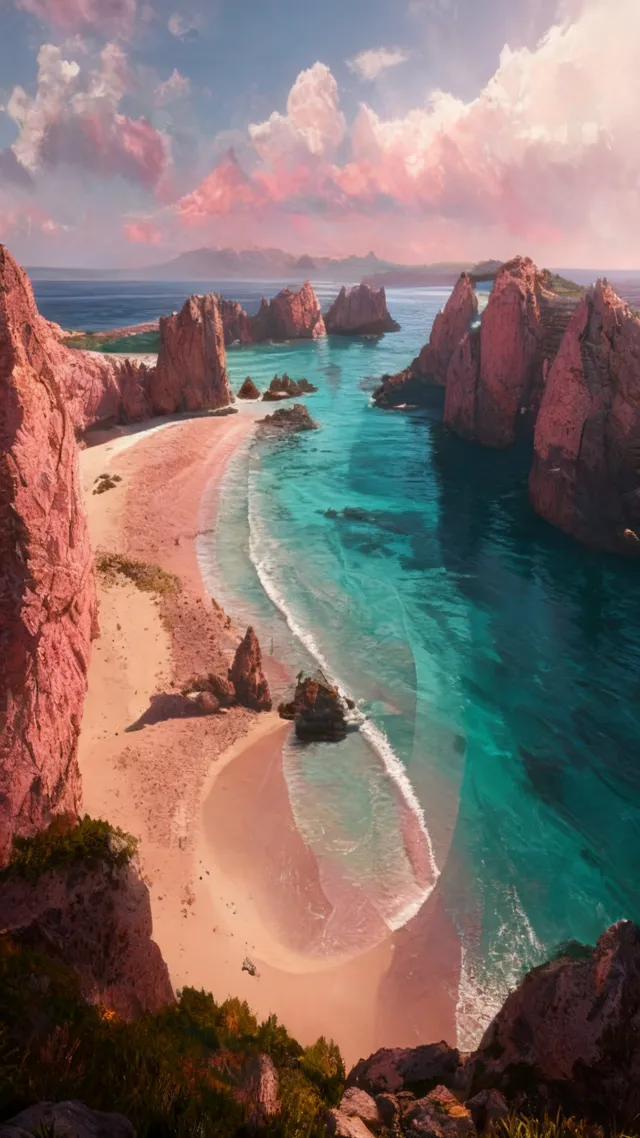
You have to earn Wineglass Bay. A steep climb through pink granite, a lookout that stops conversation mid-sentence, and a sweep of white sand so clean it looks unreal — this is one of the world's great beaches, and Tasmania makes you walk for it.
You smell the eucalyptus before you see anything at all. The car park at the foot of the Hazards is unremarkable — gravel, a few information boards, the chatter of other walkers lacing up boots — and there is no hint yet of what you've driven to the far edge of Tasmania to find. Then the track begins to climb, the bush closes in, and for forty hard-breathing minutes Wineglass Bay keeps its secret. The world's most photographed beaches usually meet you at the door. This one makes you work, and that, I'd come to realize, is the whole point.
The path up to the Wineglass Bay lookout does not ease you in. It rises almost from the first step, switchbacking up the saddle that sits between two of the granite peaks known as the Hazards, and within minutes your calves are arguing and your shirt is sticking to your back. This is not a stroll; it's a proper ascent, stone steps and exposed rock, and on a warm Tasmanian afternoon the sun finds you between the trees.
What you notice, once you've stopped noticing your own breathing, is the colour of the rock. The Hazards are made of granite flushed a soft, improbable pink — a warm rose tone that deepens to orange where lichen has taken hold, and which seems to glow rather than reflect when the light comes in low. You climb through it, past boulders the size of cars, the bush thinning as you gain height until the canopy gives way to open sky.
There is a particular kind of anticipation on this track. You can hear the people ahead of you reach the top — there's always a small, involuntary sound when they do, a gasp or a laugh or a sudden hush — and it pulls you up the last steep pitch faster than your legs want to go. The lookout is just a modest timber platform bolted onto the rock. But what it frames is not modest at all.
You arrive at the lookout breathing hard, and then you simply stop. Below and beyond, framed perfectly between the shoulders of two pink granite peaks, lies the curve. Wineglass Bay opens in a single flawless arc of white sand, the kind of geometry that looks designed rather than weathered into being — a long, clean crescent holding back water that shifts through every shade of blue and green the eye can name, from pale turquoise at the shoreline to deep sapphire further out.
It is, genuinely, one of the most perfect beaches on Earth, and it regularly appears on lists of the world's finest — but no list prepares you for the symmetry of it. The sand sweeps in an almost mathematical curve, the headlands cup it on either side, and the whole composition is so balanced that the first instinct of nearly everyone at the lookout is to say nothing at all. People fall quiet here. They take the photograph, of course, but then they put the phone down, because the photograph has already failed and they know it.
What the camera cannot hold is the depth of it — the way the water reads almost tropical against the cool grey-green of the Tasmanian bush, the scale of the granite, the sheer improbability of finding this at the bottom of the world. I stood at that platform longer than I meant to, watching the colours of the bay shift as a cloud crossed the sun, and understood why people travel to the other side of the planet for a beach they may only ever see from above.
Most visitors turn back at the lookout, satisfied, and there is no shame in it — the saddle climb is the hard part and the view is the reward. But if you keep going, the track drops down the far side toward the sand, a steep, knee-testing descent that takes you off the granite and into shaded forest before delivering you, at last, onto the beach itself.
And here is the strange thing about Wineglass Bay: down on the sand, the perfect curve disappears. You can no longer see the shape that defined it from above; you're simply standing on a wide, quiet beach, the water lapping cold and clear at your feet, the granite peaks now rising behind you instead of framing the scene. The crowds thin to almost nothing. There's just the sound of small waves, the wind moving through the bush, and sand so fine and pale it squeaks underfoot. After the climb, the silence down here feels like a held breath finally released.
The name carries a darker story than the postcard suggests. Wineglass Bay is widely said to take its name not from its shape but from its past — this was once a whaling bay, and the accounts tell of waters that turned red with blood during the slaughter, until the curved inlet was said to resemble a glass filled with red wine. Standing on that clean white sand with the impossibly clear water at my ankles, the story felt almost impossible to believe — and that contrast, the beauty laid over the brutality, stayed with me longer than the view from the top. The bay you're told is one of the most beautiful in the world earned its lovely name from one of the ugliest things people did to these waters.
That, in the end, is what makes Wineglass Bay more than a pretty photograph. You climb for it, you're silenced by it, you walk down into a quiet it doesn't reveal from above — and you carry away the knowledge that the loveliest curve in the Southern Hemisphere is named for wine the colour of blood.
This is the kind of place Antropeo is built to open up — a single curve of sand that holds a climb, a view, and a haunting story all at once. Inside the app, Wineglass Bay becomes a living point on the globe, one of thousands of discoveries waiting to turn a name on a map into something you can almost feel underfoot.
Earth
In 1911 an American professor was led up the mountain by a local man. The families who lived there already knew the place.
Earth
In 1883 a volcano in Indonesia blew up. The bang crossed the Indian Ocean, and the pressure wave went around the world.
Earth
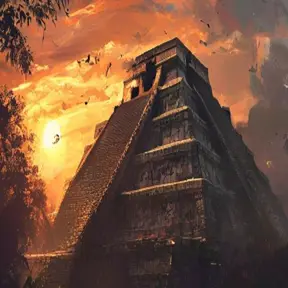
A Maya pyramid in Mexico seems to hold a snake made of shadow and a bird made of echoes. Nobody knows whether that was planned.
Earth
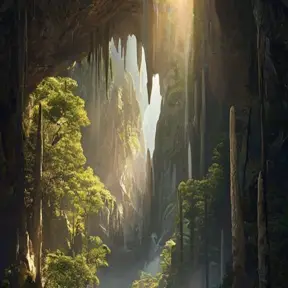
In 1991 a man in Vietnam found a cave by its sound. It has its own river, its own weather and its own jungle.