Earth
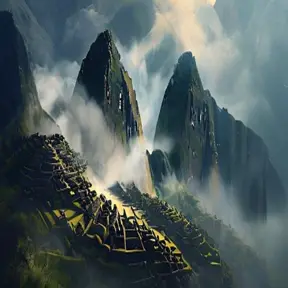
Who Found Machu Picchu? A Farmer Walked Him There
In 1911 an American professor was led up the mountain by a local man. The families who lived there already knew the place.
Earth
Once crowning Africa's highest peak, Kilimanjaro's glaciers are disappearing at an alarming pace. Their retreat offers a striking glimpse into the realities of climate change and humanity's changing relationship with the natural world.
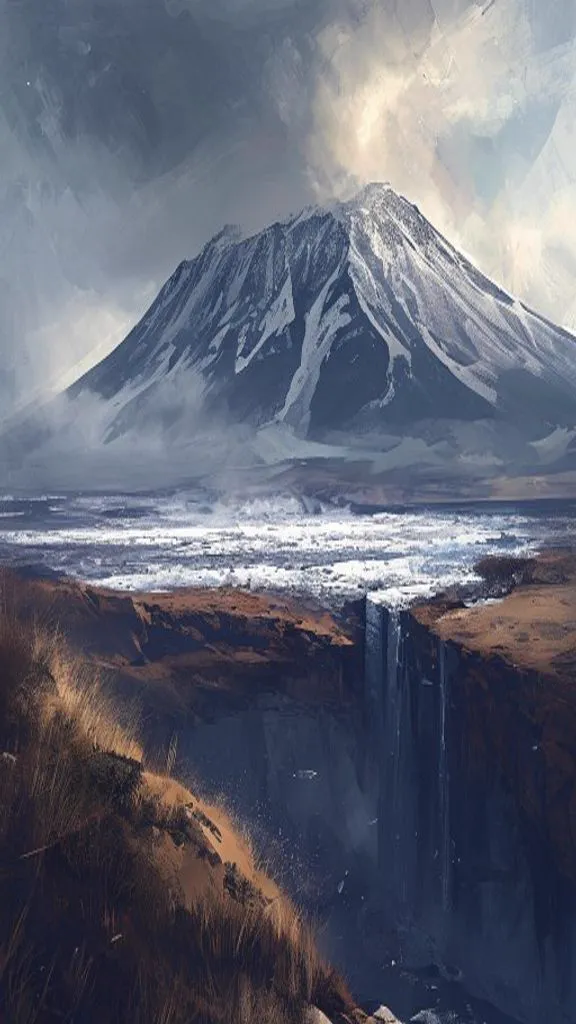
Rising nearly 6,000 meters above the plains of Tanzania, Mount Kilimanjaro has long captured the world's imagination. Its snow-capped summit, standing in striking contrast to the warm savannas below, inspired explorers, writers, and scientists for generations. Ernest Hemingway famously immortalized the mountain's icy peak in literature, while countless travelers journeyed across continents to witness one of Africa's most extraordinary landscapes.
Yet the iconic glaciers that helped define Kilimanjaro for thousands of years are disappearing.
Scientists estimate that more than 80 percent of the mountain's ice cover has vanished since the early twentieth century. The brilliant white fields that once blanketed the summit have retreated dramatically, leaving behind exposed rock where ancient ice once stood. If current trends continue, some researchers warn that Kilimanjaro's remaining glaciers could disappear entirely within the coming decades.
The story unfolding on Africa's highest mountain extends far beyond Tanzania. Kilimanjaro has become one of the world's most visible symbols of a changing climate, offering a powerful reminder that even Earth's most enduring landscapes are not immune to human influence. Its shrinking glaciers raise important questions about conservation, environmental stewardship, and the legacy future generations will inherit.
Mount Kilimanjaro is often described as a mountain of contrasts. Rising abruptly from surrounding grasslands to an elevation of 5,895 meters, it is the tallest mountain in Africa and the world's highest free-standing peak. Climbers ascending its slopes pass through multiple ecological zones, beginning in cultivated farmland before moving through lush rainforest, alpine desert, and finally reaching the frozen summit.
For centuries, Kilimanjaro's glaciers appeared almost timeless. European explorers arriving in East Africa during the nineteenth century marveled at the sight of permanent ice near the equator, challenging assumptions about where glaciers could exist. To local communities, the mountain held deep cultural significance, shaping traditions, livelihoods, and regional identity.
However, historical photographs reveal a different reality. Comparisons between images taken over the past century show dramatic reductions in ice coverage. Vast ice fields that once stretched across the summit plateau have fragmented into isolated remnants.
Unlike seasonal snowfall, glaciers represent the accumulation of snow and ice over extended periods of time. Their presence records long-term environmental conditions, making them valuable indicators of broader climatic changes. As these ancient formations disappear from Kilimanjaro's summit, they leave behind a visual archive of transformation occurring on a planetary scale.
The decline of Kilimanjaro's glaciers is the result of a complex interaction between natural variability and human-driven climate change. Scientists studying the mountain have identified rising temperatures, shifts in precipitation patterns, reduced snowfall, and changes in atmospheric moisture as important contributing factors.
Global warming influences weather systems across continents, altering how heat and moisture move through the atmosphere. Even relatively small increases in average global temperatures can significantly affect fragile ice systems that have remained stable for centuries.
Researchers emphasize that Kilimanjaro's glaciers respond differently from those found in polar regions. In addition to melting, they are increasingly affected by sublimation, a process in which ice transitions directly into water vapor without becoming liquid first. Changes in cloud cover and humidity may accelerate this loss.
Although scientific discussions continue regarding the relative importance of individual factors, there is broad agreement that the mountain's glaciers are retreating rapidly within the context of a warming world. Kilimanjaro stands alongside shrinking glaciers in the Alps, Andes, Himalayas, and polar regions as part of a global pattern that scientists have documented extensively.
The disappearance of these glaciers serves as a visible and emotionally powerful illustration of climate change. Unlike abstract statistics or distant projections, Kilimanjaro's changing summit allows people to witness environmental transformation in a place that has inspired human imagination for generations.
The retreat of Kilimanjaro's glaciers represents more than the loss of a spectacular natural landmark. It symbolizes the accelerating pace of environmental change occurring across the planet.
Glaciers influence ecosystems, tourism, scientific research, and cultural identity. Kilimanjaro attracts tens of thousands of climbers each year, many drawn by the opportunity to experience its famous snow-covered summit. Future generations may encounter a mountain that looks fundamentally different from the one known today.
The mountain also highlights an important reality about climate change: its impacts are unevenly distributed but globally interconnected. Communities that contribute relatively little to greenhouse gas emissions often face some of the greatest environmental vulnerabilities. Across Africa, changing rainfall patterns, extreme weather events, and shifting ecosystems pose significant challenges for agriculture, water security, and biodiversity conservation.
Despite these concerns, Kilimanjaro's story is not solely one of loss. It also underscores humanity's capacity for awareness and action. Scientific research continues to improve our understanding of Earth's climate systems, while international efforts seek to reduce emissions and strengthen resilience.
Whether Kilimanjaro's remaining glaciers endure for decades or disappear entirely, their retreat offers an urgent lesson about the consequences of environmental change. The mountain reminds us that even the landscapes we perceive as permanent are constantly evolving—and that the choices societies make today will help determine the world inherited by future generations.
Standing above the African plains, Mount Kilimanjaro has witnessed centuries of human history beneath its icy summit. Today, however, the mountain tells a different story—one of transformation, vulnerability, and responsibility.
The shrinking glaciers of Kilimanjaro challenge us to think beyond headlines and statistics. They invite us to consider how interconnected our planet truly is and how environmental changes in one region reflect broader global trends. As ancient ice disappears from Africa's highest peak, the mountain becomes both a warning and a call to action.
Understanding these changes begins with curiosity. Through stories like Kilimanjaro's, we gain not only knowledge about our world but also a deeper appreciation for the landscapes, ecosystems, and communities that depend upon it. In learning about these places today, we become better prepared to protect them tomorrow.
Earth
In 1911 an American professor was led up the mountain by a local man. The families who lived there already knew the place.
Earth
In 1883 a volcano in Indonesia blew up. The bang crossed the Indian Ocean, and the pressure wave went around the world.
Earth
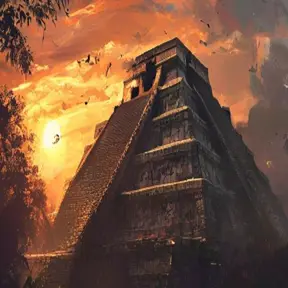
A Maya pyramid in Mexico seems to hold a snake made of shadow and a bird made of echoes. Nobody knows whether that was planned.
Earth
In 1991 a man in Vietnam found a cave by its sound. It has its own river, its own weather and its own jungle.