Cultures
Seventeen Giant Stone Faces, and No Two Are the Same
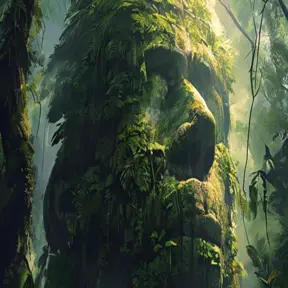
The Olmec carved heads from basalt boulders carried across the jungle. Each face looks like a particular person.
Cultures
The Inca built the largest empire in pre-Columbian America without wheels, iron tools, or written language. Discover how geography, quipus, and mountain engineering shaped one of history's most remarkable civilizations.
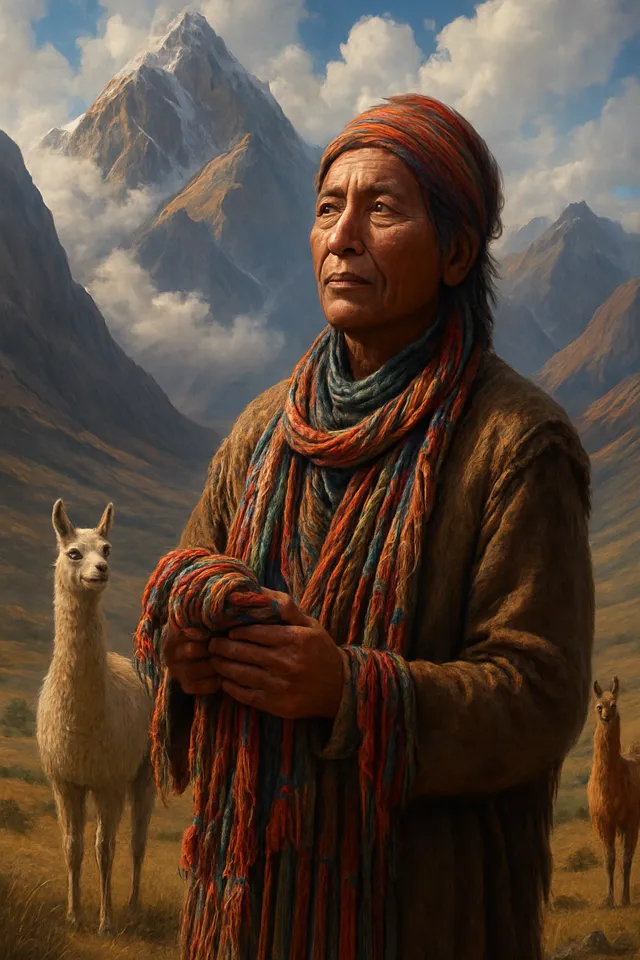
Yet the Inca succeeded. Between the fifteenth and early sixteenth centuries, they forged the largest empire in pre-Columbian America across one of the most geographically challenging regions on Earth. Stretching more than 4,000 kilometres along the Andes, the empire connected snow-covered peaks, arid coastal deserts, fertile valleys, and the edges of the Amazon rainforest into a remarkably unified political and economic system.
Their achievements remain astonishing. The Inca constructed more than 40,000 kilometres of roads through rugged mountain terrain that would challenge modern engineers even today. They transformed steep hillsides into productive agricultural terraces capable of supporting millions of people. They built cities such as Machu Picchu at elevations exceeding 2,400 metres, using precisely cut stonework so refined that many structures have withstood centuries of earthquakes without mortar.
To administer this vast territory, the Inca relied on quipus—intricate systems of knotted cords used to record census information, taxation obligations, and administrative data across the empire. Some scholars suggest that quipus may also have preserved historical narratives and other forms of complex information, although this interpretation remains the subject of ongoing research and debate.
What distinguished the Inca was not their ability to overcome geography, but their willingness to understand it. They recognised that life in the Andes demanded adaptation rather than domination. Their empire was built through careful observation of mountain environments, collective organisation, and practical innovations designed specifically for the landscapes they inhabited.
Today, as societies around the world confront climate change and seek more sustainable ways of living within increasingly fragile environments, the Inca offer a powerful reminder that human ingenuity often emerges from working with the natural world rather than against it. Their story is not simply one of imperial expansion. It is a testament to the extraordinary possibilities that arise when geography becomes a source of wisdom rather than an obstacle to overcome.
The Road System That Defied Geography
The Inca road network, known as Qhapaq Ñan or the Royal Road, stands among the most extraordinary engineering achievements in human history. Stretching more than 40,000 kilometres across the Andes, it connected the empire's four administrative regions through landscapes defined by towering peaks, deep canyons, deserts, and cloud forests. While comparisons with the Roman road system are inevitable, the environments the Inca navigated were arguably even more demanding.
These were far more than simple mountain paths. Inca engineers built suspension bridges from woven ichu grass that spanned dramatic gorges, carved stairways into near-vertical cliffs, and constructed causeways across wetlands and flood-prone valleys. Along these routes, they established tambos—waystations stocked with food, supplies, and shelter for officials, travellers, and the empire's messenger system.
Those messengers, known as chasquis, formed one of the ancient world's most efficient communication networks. At dawn, runners would set off carrying quipus and memorised messages between relay stations positioned across the Andes. Through this remarkable system of organisation and endurance, information could travel hundreds of kilometres in a single day across terrain that would challenge even modern travellers.
Yet the roads served a purpose beyond communication and military movement. They connected distinct ecological zones within the Andes, creating an integrated system of exchange. Within relatively short distances, communities could access environments ranging from glaciated highlands to fertile valleys and tropical forests. The Inca understood this extraordinary environmental diversity as an opportunity rather than a limitation.
This approach, often described by scholars as the principle of "verticality," allowed communities to maintain access to resources found at different elevations. Potatoes and quinoa thrived in higher regions, maize flourished in lower valleys, while llamas provided wool and transport across the puna grasslands. The road network enabled these products, people, and ideas to move efficiently throughout the empire, reinforcing both economic resilience and political unity.
For the Inca, infrastructure was not simply about overcoming geographical barriers. It was a means of weaving together one of the world's most complex mountain environments into a functioning imperial system. Their roads demonstrate a profound understanding that geography was not an obstacle to civilisation but the very foundation upon which it could be built.
Knots as Data
When Spanish conquistadors arrived in the Andes during the sixteenth century, they encountered an empire unlike any they had known. There were no libraries filled with manuscripts, no written legal codes, and no alphabetic records documenting the administration of millions of people. Yet the Inca governed one of the largest empires in the Americas with remarkable efficiency. Their solution was the quipu: a sophisticated system of knotted cords that transformed information into something that could be carried, interpreted, and preserved without written language.
For centuries, European observers dismissed quipus as primitive memory aids used solely for counting. Modern research has painted a far more complex picture. Quipus were essential administrative tools used to record census data, taxation obligations, agricultural production, labour requirements, and the distribution of resources throughout the empire. Through carefully arranged knots, cord colours, and structural patterns, the Inca developed an information system capable of supporting a vast and diverse population spread across thousands of kilometres.
Anthropologist Gary Urton, one of the leading scholars of quipu studies, has demonstrated that these devices encoded information using multiple variables simultaneously. The position of knots represented numerical values within a decimal system, while the colour, material, spinning direction, and arrangement of cords may have conveyed additional layers of meaning. Rather than viewing quipus as simple counting tools, researchers increasingly recognise them as a sophisticated form of information technology uniquely adapted to Inca society.
Some scholars have proposed that quipus may have contained historical narratives, genealogies, or other non-numerical information, although this interpretation remains debated. While we cannot yet fully decipher surviving examples, the growing body of evidence suggests that the Inca developed a highly specialised method for organising and transmitting knowledge without relying on alphabetic writing.
Geography played an important role in shaping this system. The Andes presented logistical challenges that differed greatly from those faced by civilisations that developed writing on papyrus, parchment, or paper. Quipus offered a durable and portable alternative. Officials known as quipucamayocs carried these knotted records along the imperial road network, collecting information from local communities and communicating administrative decisions across the empire.
More than a practical tool, the quipu reflected the Inca understanding of organisation and interconnectedness. Information was structured through relationships between cords rather than through linear sequences of text. In this way, quipus reveal that sophisticated governance does not depend upon a single model of literacy. The Inca demonstrated that knowledge could be recorded, preserved, and shared through systems shaped by local environments, cultural traditions, and the unique demands of geography itself.
Rethinking Technological Progress
When Spanish conquistadors encountered the Inca Empire in the sixteenth century, they often measured it against European standards of technological advancement. They noted the absence of wheeled transportation, iron tools, alphabetic writing, and market economies, interpreting these differences as signs of inferiority. Yet this perspective reveals more about European assumptions than it does about Inca achievement.
The Inca did not lack innovation; they developed technologies and social systems specifically adapted to the realities of the Andes. In one of the world's most challenging mountain environments, conventional solutions often proved impractical. Steep mountain trails, narrow ridges, and dramatic changes in elevation made wheeled vehicles largely ineffective. Instead of forcing unsuitable technologies onto their landscape, the Inca refined alternatives that worked with the terrain around them.
Their extensive road network enabled efficient movement across the empire, while llamas served as reliable pack animals capable of navigating routes inaccessible to carts or wagons. In architecture and engineering, the Inca achieved remarkable precision using locally available materials and techniques developed over generations. Massive stone blocks at sites such as Sacsayhuamán were shaped and assembled with extraordinary accuracy, creating earthquake-resistant structures that continue to astonish archaeologists and engineers alike.
Perhaps the empire's most remarkable innovation was organisational rather than mechanical. Through the mit'a system, communities contributed labour to public projects including roads, terraces, storehouses, and infrastructure essential to collective survival. In return, the state redistributed resources, maintained food reserves, and provided support during periods of hardship. While far from perfect, this system reflected a society built around reciprocity and shared responsibility rather than individual accumulation.
Anthropologist John Murra described this approach as a "vertical archipelago" economy, in which communities maintained access to multiple ecological zones to maximise agricultural diversity and resilience. By coordinating resources across different elevations and climates, the Inca created a flexible system capable of supporting millions of people in an environment often characterised by unpredictability.
The Inca challenge modern assumptions about what progress should look like. Their achievements demonstrate that innovation is not a universal pathway defined by a single set of inventions. Technologies emerge within specific environmental and cultural contexts, shaped by local needs and opportunities. Rather than attempting to dominate the Andes, the Inca learned to work within its constraints, transforming geography from a limitation into one of their greatest strengths.
As societies today confront climate change, resource scarcity, and the need for more sustainable forms of development, the Inca experience offers an important lesson. Human ingenuity is not measured solely by technological complexity, but by the ability to adapt thoughtfully to the environments we inhabit. The legacy of the Inca reminds us that successful civilisations are often those that understand their landscapes deeply enough to build alongside them rather than against them.
The Inca Empire challenges many of our assumptions about how great civilisations are built. They constructed vast road networks without wheeled transport, managed complex administrative systems without alphabetic writing, and sustained millions of people without market economies in the modern sense. Their achievements were not the result of overcoming geography, but of understanding it deeply.
Across the Andes, the Inca developed solutions tailored to one of the world's most demanding environments. Terraced mountainsides transformed steep slopes into productive farmland. Quipus allowed information to move efficiently across thousands of kilometres. Roads connected diverse ecological zones into a resilient imperial system. Each innovation reflected a profound awareness that survival and prosperity depended on adaptation rather than domination.
Today, the remnants of Inca civilisation continue to inspire awe. The stone walls of Machu Picchu still stand against earthquakes that have toppled more recent structures. Ancient terraces continue to shape Andean landscapes centuries after they were first constructed. Quipus remain among history's most intriguing intellectual mysteries, reminding us that knowledge can be organised and transmitted in ways that challenge our modern assumptions about literacy and information.
Perhaps the Inca's greatest lesson is that progress does not follow a single universal path. Human societies innovate in response to the environments they inhabit, drawing upon local knowledge, collective organisation, and cultural values to solve the challenges they face. The Inca did not seek to reshape the Andes to fit their needs. Instead, they learned to live within the rhythms of the mountains, creating systems that worked with the landscape rather than against it.
As the modern world confronts climate change, environmental pressures, and questions about sustainable development, the Inca example feels increasingly relevant. Their story reminds us that resilience often emerges not from technological domination, but from humility, cooperation, and a willingness to learn from the places we call home. The Inca did not leave behind a blueprint for the future. They left something perhaps even more valuable: proof that human ingenuity flourishes when it is guided by a deep understanding of geography and our relationship with the natural world.
Cultures
The Olmec carved heads from basalt boulders carried across the jungle. Each face looks like a particular person.
Cultures
Traders carried goods across Asia in short legs. The name only appeared in 1877.

Cultures
Shinrin-yoku is a Japanese idea: walk slowly among trees, on purpose, and notice things.

Cultures
In 1932 the Australian army went out to deal with emus. The emus were still there when the soldiers left.