How the Search for Eternal Life Led to the Discovery of Gunpowder
An ancient quest for immortality during China's Tang Dynasty led to one of history's most transformative discoveries. Learn how Daoist alchemists accidentally created gunpowder and changed the world forever.
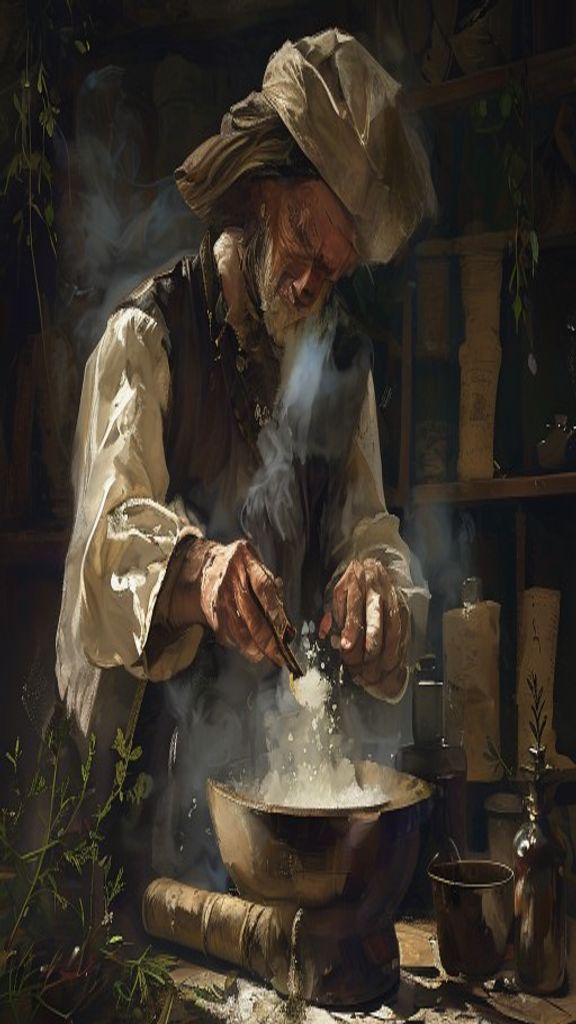
On a quiet evening in ninth-century China, a Daoist alchemist carefully arranged a collection of powders and minerals across his workbench. His objective was not conquest, destruction or military advantage. Like many scholars of his time, he was pursuing one of humanity's oldest ambitions: the desire to overcome death itself. Although no historical records describe the precise details of these experiments, historians believe that Tang Dynasty alchemists often worked with substances believed to possess transformative properties. Influenced by Daoist philosophies that emphasised harmony with nature and the pursuit of longevity, they sought to uncover an elusive elixir capable of extending human life indefinitely. The quest attracted the attention of emperors, scholars and physicians alike, all captivated by the possibility that mortality might one day be conquered through knowledge and experimentation. Among the ingredients frequently studied were sulfur, charcoal and saltpetre. Individually, each substance had recognised medicinal or symbolic significance within the intellectual traditions of the period. Sulfur was valued for its purifying qualities, saltpetre for its cooling properties, and charcoal for its transformative relationship with fire. Combined, they represented more than simple minerals and compounds; they embodied an attempt to understand the hidden forces that governed both nature and human existence. Yet history is often shaped not only by intention, but also by accident. At some point during these alchemical investigations, experimenters discovered that certain combinations of these materials reacted with extraordinary intensity when exposed to heat. Rather than producing an elixir of eternal life, the mixture generated flames, smoke and explosive force unlike anything they had previously encountered. Early Chinese texts would later describe the dangers of these formulations, warning that they could burn hands and even destroy homes. The failed pursuit of immortality had inadvertently revealed something else entirely: the foundations of what would eventually become known as gunpowder. To understand why this discovery emerged in Tang China requires looking beyond the laboratory itself. The Tang Dynasty, which ruled from 618 to 907 AD, represented one of the most remarkable periods of prosperity and innovation in Chinese history. Its capital, Chang'an, stood among the largest and most cosmopolitan cities in the world. Merchants, scholars and travellers arrived through the vast networks of the Silk Road, carrying not only silk and precious goods but also new ideas, scientific knowledge and cultural traditions. This environment of intellectual openness fostered extraordinary achievements in literature, medicine, astronomy and technology. It was an age that produced some of China's most celebrated poets and encouraged a spirit of inquiry that pushed the boundaries of contemporary understanding. Within this atmosphere of curiosity and experimentation, alchemy occupied a unique position, existing somewhere between philosophy, medicine and what would eventually evolve into chemistry. The individuals conducting these experiments were not inventors in the modern sense. They did not set out to transform warfare or alter the balance of power between nations. Their motivations were profoundly human. They sought healing, wisdom and answers to fundamental questions about life itself. In attempting to extend human existence, they instead uncovered a substance that would reshape the course of world history. Over the centuries that followed, knowledge of gunpowder spread far beyond the borders of China. Through trade routes, diplomatic contacts and military encounters, it travelled across continents, influencing everything from battlefield tactics to the rise and fall of empires. Few discoveries have had such a lasting impact on civilisation. Yet the origins of gunpowder remain rooted in an extraordinary irony. One of humanity's most influential inventions emerged not from a desire for conflict, but from a search for permanence in the face of mortality. The alchemists of the Tang Dynasty never achieved the immortality they sought. Instead, their experiments secured something different: an enduring place in history through a discovery whose consequences continue to shape the modern world. The story of gunpowder is therefore not simply about the invention of an explosive substance. It is a story about curiosity, unintended consequences and the unpredictable pathways through which human innovation unfolds. It reminds us that some of history's greatest transformations begin not with certainty, but with the courage to explore the unknown.
The Tang Dynasty's Quest for Immortality
The desire to overcome death is as old as civilisation itself. Across cultures and centuries, rulers, philosophers and healers have sought ways to extend human life, preserve youth and unlock the secrets of longevity. In Tang Dynasty China, however, this universal ambition evolved into something far more organised and influential. It became a pursuit supported by philosophy, encouraged by imperial patronage and driven by a genuine belief that nature concealed the means to transcend mortality. Founded in 618 AD, the Tang Dynasty presided over what many historians consider one of China's greatest golden ages. It was a period marked by political stability, economic prosperity and extraordinary cultural achievement. Poetry flourished under masters such as Li Bai and Du Fu, trade expanded along the Silk Road, and advances in medicine, astronomy and engineering reflected a society increasingly confident in its intellectual capabilities. Within this atmosphere of curiosity and innovation, the search for longevity occupied a unique place at the intersection of science, spirituality and medicine. Central to this pursuit was Daoism, a philosophical and religious tradition that emphasised living in harmony with the Dao—the fundamental principle believed to govern the natural order of the universe. Daoist teachings encouraged balance, self-cultivation and an understanding of the relationship between humanity and nature. For some practitioners, this philosophy also inspired the belief that longevity, and perhaps even immortality, could be achieved through disciplined practices and the careful manipulation of natural substances. This belief gave rise to what became known as waidan, or external alchemy. Unlike modern chemistry, which seeks to understand the composition and behaviour of matter through empirical investigation, Tang alchemy combined observation with spiritual aspirations. Practitioners experimented with minerals, metals and botanical ingredients believed to possess transformative qualities. Gold, which resisted corrosion, symbolised permanence. Cinnabar, a mercury sulfide mineral with a striking red appearance, was associated with vitality and renewal. Sulfur and saltpetre were valued for their medicinal properties and their apparent ability to influence the body's internal balance. Imperial courts frequently supported these endeavours. Several Chinese emperors developed a fascination with elixirs promising extended life, commissioning scholars and alchemists to continue their investigations. The motivations behind this patronage were both personal and political. For rulers responsible for governing vast territories, longevity represented not only a triumph over human limitations but also the prospect of preserving stability and continuity within the empire itself. To modern audiences, these experiments may appear misguided or even dangerous. Indeed, many substances used in early alchemy, particularly those containing mercury, carried serious health risks. Yet judging these practices solely through the lens of contemporary science overlooks the intellectual environment in which they emerged. Tang alchemists were attempting to understand the world using the knowledge available to them. Their work reflected a genuine commitment to observation, experimentation and the belief that nature's mysteries could eventually be revealed. Importantly, these scholars were not isolated mystics operating on the fringes of society. They existed within one of the most sophisticated civilisations of their time. Tang China benefited from extensive networks of trade and cultural exchange that introduced new medicinal practices, materials and ideas from across Asia and beyond. Chang'an, the imperial capital, attracted merchants, diplomats and scholars from distant regions, creating an environment where knowledge could circulate freely and innovation could flourish. It was within this remarkable convergence of philosophical inquiry, imperial ambition and scientific curiosity that alchemical experimentation expanded. The laboratories of Tang China became places where hope and uncertainty coexisted—where the dream of extending life inspired countless attempts to understand the hidden properties of the natural world. Few of those involved could have anticipated that their search for immortality would lead them in an entirely different direction. In pursuing answers to one of humanity's oldest questions, they stood unknowingly on the threshold of a discovery whose consequences would extend far beyond medicine or spirituality. The experiments designed to preserve life were about to reveal a force capable of reshaping the course of history itself.
From Alchemical Curiosity to Military Innovation
The earliest references to gunpowder in Chinese history do not describe a revolutionary weapon capable of altering the balance of global power. Instead, they appear as cautionary observations within alchemical texts, warnings about mixtures that produced unexpected flames and dangerous explosions. What had begun as a search for longevity had inadvertently uncovered a substance unlike any previously known.
Ancient Chinese records reveal an increasing awareness of these volatile reactions. One text from the Tang period warned that combining sulfur, saltpetre and other materials could result in fires severe enough to burn hands and even destroy entire homes. For alchemists accustomed to pursuing remedies and elixirs, these outcomes represented failure rather than success. Yet human curiosity has a remarkable tendency to transform accidents into opportunities for understanding.
Over time, the unusual properties of these mixtures attracted attention beyond the world of alchemy. If the substance generated intense heat and expanding force, could those characteristics be harnessed for practical purposes? The answer gradually emerged through experimentation and adaptation. The Chinese initially used early forms of gunpowder in ceremonial contexts, where fire and noise carried symbolic significance. Fireworks, which remain closely associated with Chinese cultural celebrations today, reflected an appreciation for both the visual spectacle and spiritual meaning of controlled explosions.
However, it did not take long for military strategists to recognise gunpowder's potential. During the centuries following the Tang Dynasty, Chinese inventors developed increasingly sophisticated applications for this new technology. Fire arrows became among the earliest examples of gunpowder-assisted weaponry. Traditional arrows were modified with small tubes containing explosive mixtures that ignited during flight, creating confusion and psychological impact among opposing forces.
These innovations expanded further during the Song Dynasty, when advances in military engineering accelerated the development of explosive devices. Primitive bombs, incendiary projectiles and early rocket technologies emerged from the foundations established by those initial alchemical discoveries. While these weapons differed significantly from modern firearms, they represented a fundamental transformation in the nature of warfare. For thousands of years, military power had depended largely on physical strength, traditional siege equipment and conventional projectile weapons. Gunpowder introduced the possibility of generating force through chemistry rather than muscle alone.
The implications extended far beyond battlefield tactics. Military superiority increasingly became linked to technological innovation, encouraging states to invest in experimentation and adaptation. Knowledge surrounding gunpowder production and its applications gradually spread through trade networks, diplomatic exchanges and periods of conflict. As information moved across Central Asia and eventually reached the Middle East and Europe, different societies modified and refined the technology according to their own strategic needs.
What makes this transformation particularly remarkable is the contrast between intention and outcome. The individuals responsible for discovering gunpowder were not soldiers seeking military advantage. They were scholars motivated by philosophical questions about life, health and human existence. Their experiments reflected optimism about humanity's ability to understand and improve the natural world. Yet their unintended discovery would ultimately influence the rise and fall of empires, alter geopolitical relationships and reshape the course of global history.
The evolution of gunpowder from alchemical curiosity to military innovation illustrates one of history's recurring themes: transformative breakthroughs rarely unfold exactly as their creators anticipate. Scientific discoveries often acquire meanings and applications far removed from their original purpose. In the case of gunpowder, a failed attempt to conquer mortality became one of the most significant technological developments ever recorded.
As its influence expanded beyond China's borders, gunpowder ceased to be merely an unusual chemical mixture. It became a catalyst for profound historical change, redefining how societies projected power and interacted with one another. The accidental discovery made in the laboratories of Tang China was beginning to reshape the wider world.
A Discovery That Continues to Shape the Modern World
More than a thousand years have passed since Tang Dynasty alchemists unknowingly created the foundations of gunpowder, yet the consequences of that accidental discovery continue to echo throughout modern civilisation. Few inventions have altered the course of human history so profoundly. What began as an unsuccessful search for immortality evolved into a technological breakthrough that transformed warfare, influenced political structures and reshaped relationships between nations. As gunpowder spread beyond China through trade routes and cultural exchanges, societies across Asia, the Middle East and Europe adapted the technology to their own circumstances. Over time, primitive incendiary devices gave way to increasingly sophisticated weapons, including cannons and firearms capable of changing the outcome of battles and sieges. Fortifications that had once stood as symbols of security and military strength became vulnerable to new forms of attack. States that embraced these innovations often gained significant strategic advantages, while those slower to adapt found themselves at an increasing disadvantage. Historians frequently identify gunpowder as one of the transformative technologies that contributed to the emergence of the modern world. It influenced the rise and fall of empires, altered patterns of exploration and colonisation, and changed the ways governments projected power both within their borders and beyond them. The development of nation-states, shifting military doctrines and evolving geopolitical landscapes were all shaped, in part, by the revolutionary potential first uncovered in Tang China. Yet focusing exclusively on conflict risks overlooking the deeper significance of this story. The origins of gunpowder reveal something fundamental about the nature of human progress itself. The Tang alchemists were not motivated by conquest or destruction. Their experiments were driven by curiosity, philosophical inquiry and a desire to understand the mysteries of life. They sought healing and longevity, believing that nature held secrets capable of improving the human condition. Their experience serves as a reminder that innovation rarely follows predictable paths. Some of humanity's most influential discoveries emerge unexpectedly, producing consequences far beyond the intentions of those who first made them. Scientific advancement is often shaped by experimentation, persistence and the willingness to investigate unanswered questions, even when the destination remains uncertain. The story of gunpowder also illustrates the interconnected nature of human civilisation. Ideas and technologies seldom remain confined to the places where they originate. Through trade, migration and cultural exchange, discoveries evolve and acquire new meanings as they move between societies. The explosive mixture first identified in Chinese laboratories ultimately became part of a shared global history, influencing people separated by vast distances and centuries of time. Perhaps the greatest irony lies in the contrast between the original ambition and the ultimate outcome. The alchemists of the Tang Dynasty failed to achieve the immortality they sought. Yet through their unintended discovery, they secured a form of permanence they could never have anticipated. Their work became woven into the broader story of human civilisation, ensuring that their curiosity and experimentation would be remembered long after the empires they served had disappeared. The legacy of gunpowder therefore extends beyond its practical applications. It stands as a testament to humanity's enduring drive to explore the unknown and to seek answers to life's most profound questions. In attempting to conquer mortality, Tang Dynasty alchemists instead transformed history itself. Their story reminds us that the pursuit of knowledge often leads to destinations we never intended to reach, and that within our greatest failures can lie discoveries capable of changing the world forever.
What this teaches us about geography
The discovery of gunpowder during the Tang Dynasty stands as one of history's most remarkable examples of unintended consequences. What began as a sincere search for immortality ultimately produced an invention that would reshape warfare, influence the rise and fall of empires, and alter the trajectory of human civilisation. Few breakthroughs have had such far-reaching and enduring effects. Yet the story of gunpowder is about far more than military innovation. At its heart lies a deeply human narrative of curiosity, ambition and the relentless pursuit of knowledge. The Daoist alchemists who experimented with sulfur, charcoal and saltpetre were not seeking to transform the world through force. They were attempting to answer one of humanity's oldest questions: whether life itself could be prolonged beyond its natural limits. Their failure to discover an elixir of eternal life was, paradoxically, the source of one of history's greatest discoveries. It serves as a powerful reminder that progress rarely unfolds according to plan. Many of the innovations that shape our world emerge through unexpected pathways, revealing possibilities that their creators could never have imagined. More than a thousand years later, the legacy of those Tang Dynasty experiments continues to resonate. It reflects humanity's enduring desire to understand the unknown and our willingness to explore beyond the boundaries of established knowledge. In laboratories, observatories and research centres around the world, the same spirit of inquiry persists today—the belief that through experimentation and discovery, new insights into our world remain within reach. The alchemists of Tang China never achieved the immortality they sought. But in pursuing it, they secured something else entirely: a permanent place in the story of human history. Their accidental discovery reminds us that even our most unexpected outcomes can shape the future in profound ways, and that the pursuit of knowledge itself remains one of humanity's defining characteristics. Sometimes, the discoveries that change the world are not the ones we intend to make. They are the ones we stumble upon while searching for answers to entirely different questions. In the pursuit of eternal life, Tang Dynasty alchemists instead ignited a force that would transform civilisation forever—a testament to the unpredictable, extraordinary nature of human curiosity.