Earth
Who Found Machu Picchu? A Farmer Walked Him There
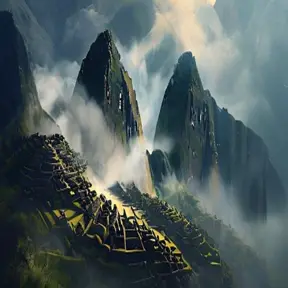
In 1911 an American professor was led up the mountain by a local man. The families who lived there already knew the place.
Earth
Deep within Antarctica's McMurdo Dry Valleys, a crimson stream emerges from Taylor Glacier. Once thought to be a scientific anomaly, Blood Falls has revealed an ancient ecosystem hidden beneath the ice and transformed our understanding of life in extreme environments.
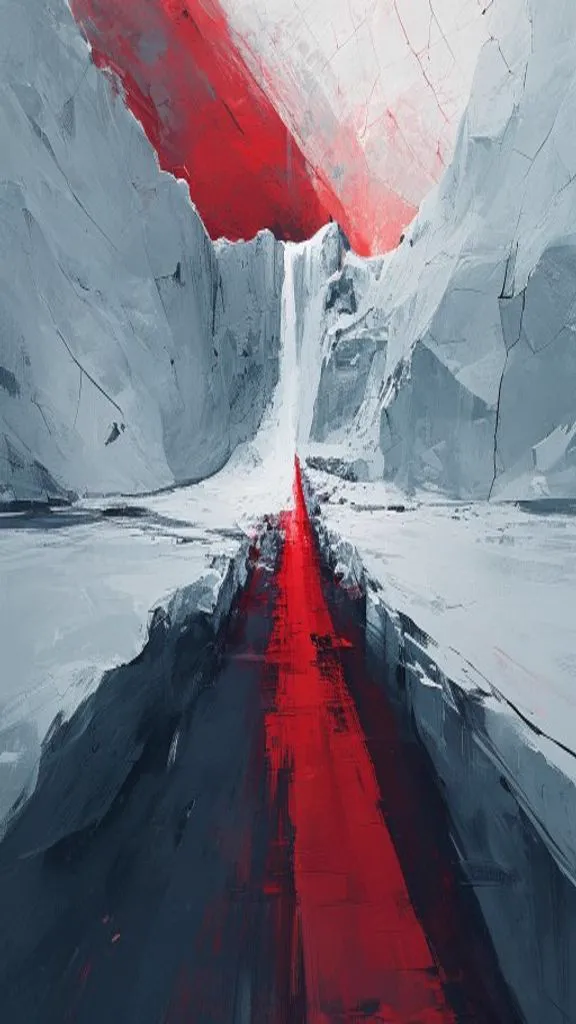
In the silence of Antarctica's Taylor Valley, where temperatures regularly plunge well below freezing and almost nothing survives, a crimson stain spills from the face of an ancient glacier.
Against a landscape defined by white ice, pale mountains and endless emptiness, Blood Falls appears almost impossible. Thick streams of iron-rich water seep through cracks in the Taylor Glacier before turning a deep rust-red as they meet the air, creating the unsettling illusion that the glacier itself is bleeding.
When Australian geologist Thomas Griffith Taylor first documented the phenomenon during Robert Falcon Scott's Terra Nova Expedition in 1911, the discovery baffled scientists. Early theories suggested red algae might be responsible. Others wondered whether minerals trapped within the glacier had somehow stained the ice. More than a century later, researchers uncovered an explanation that proved even more extraordinary than the mystery itself.
Beneath nearly 400 metres of ice lies an ancient reservoir of hypersaline water cut off from the outside world for millions of years. Within this dark, oxygen-free environment, microbial life has persisted against extraordinary odds, surviving without sunlight in conditions once thought too extreme to support life at all.
Standing before Blood Falls today, the overwhelming feeling is not fear but humility. Antarctica has a way of making people feel small. The continent strips away familiar sounds and distractions until only the wind remains. Blood Falls serves as a reminder that even in one of the most studied periods in human history, Earth continues to hold secrets hidden beneath its frozen surface.
What began as a geological curiosity has become something far more significant. Blood Falls offers scientists a rare glimpse into how life adapts to extreme environments on Earth and provides clues that may one day guide the search for life beyond our planet.
The McMurdo Dry Valleys do not look like the Antarctica most people imagine.
There are no endless expanses of pristine snow stretching towards the horizon. No towering icebergs drifting through steel-grey waters. Instead, the landscape is startlingly bare. Jagged mountains rise from valleys of exposed rock and gravel. Powerful katabatic winds descend from the Antarctic plateau at speeds that can exceed 300km/h (186mph), stripping away moisture and preventing significant snowfall from accumulating.
Scientists often describe the Dry Valleys as one of the closest environments on Earth to the surface of Mars. They are among the driest places on the planet, with some areas having gone millions of years without measurable rainfall. Temperatures remain far below freezing for much of the year, and the combination of intense cold, extreme aridity and relentless winds creates conditions where survival is exceptionally difficult.
It is an environment that immediately alters one's sense of scale and significance. Standing in Taylor Valley, silence becomes one of the most striking sensations. There are no birds overhead, no trees swaying in the wind, no sounds of distant human activity. The vastness of the landscape can feel almost overwhelming. Everything appears ancient and untouched, as though time itself moves differently here.
The Dry Valleys were first extensively explored during the heroic age of Antarctic exploration in the early twentieth century. Early expeditions led by figures such as Robert Falcon Scott ventured into these valleys with limited equipment and only a rudimentary understanding of the continent they sought to explore. What they encountered challenged assumptions about Antarctica itself. Rather than a uniform expanse of ice, they discovered pockets of extraordinary environmental diversity hidden within the frozen continent.
Even today, reaching Taylor Valley remains a logistical challenge. Researchers typically travel from New Zealand to Antarctica before continuing by helicopter from research stations near McMurdo Sound. Every piece of equipment must be carefully planned and transported. The environment offers little room for error. Antarctica has always demanded humility from those who enter it.
Perhaps this is why Blood Falls feels so unsettling when first encountered. In a place defined by white glaciers, pale rock and an almost monochrome palette, the sudden appearance of deep red against the ice seems profoundly unnatural. It interrupts expectations. It forces attention. Even knowing the scientific explanation does little to diminish the emotional impact of seeing what appears to be a glacier bleeding into one of the harshest landscapes on Earth.
For over a century, Blood Falls has captivated explorers and scientists alike. It is a reminder that even in environments that appear lifeless, hidden processes continue beyond human sight. Beneath Antarctica's vast ice sheets, entire worlds exist that challenge our understanding of geology, biology and the remarkable ability of life to persist against extraordinary odds.
The story of Blood Falls entered scientific history in 1911, during one of the most challenging eras of polar exploration. Australian geologist Thomas Griffith Taylor, a member of Robert Falcon Scott's Terra Nova Expedition, was mapping the McMurdo Dry Valleys when he noticed something extraordinary emerging from the face of Taylor Glacier.
Against the stark whiteness of the Antarctic landscape, streams of dark red liquid appeared to flow directly from the ice. To explorers already operating at the limits of human endurance, the sight must have been both fascinating and deeply unsettling. Taylor initially believed that red algae might be responsible for the unusual colouration, a reasonable assumption given the limited scientific knowledge available at the time. Yet no definitive explanation could be found.
For decades, Blood Falls remained one of Antarctica's most enduring mysteries.
The phenomenon challenged expectations about what glaciers should be. Ice was associated with purity, stillness and permanence. Blood Falls represented the opposite. It moved. It changed. It seemed alive in a place where almost nothing else was.
The early explorers who travelled through Antarctica operated without satellite imagery, GPS navigation or the sophisticated scientific instruments available today. Their observations relied heavily on patience, field notes and an extraordinary capacity to endure hardship. Temperatures regularly dropped far below freezing, supplies were limited, and communication with the outside world was virtually impossible. Every discovery carried a sense of genuine uncertainty because so much of the continent remained unknown.
Blood Falls quickly became one of those discoveries that resisted easy explanation. As Antarctic science advanced throughout the twentieth century, researchers proposed a variety of theories. Some suggested microscopic organisms might be producing the striking red pigments. Others believed minerals trapped within the glacier could somehow be interacting with the environment. Each hypothesis offered pieces of the puzzle, but none fully accounted for what scientists were observing.
Part of Blood Falls' enduring fascination lies in its contradiction. Antarctica is often perceived as static, frozen and unchanging. Yet Blood Falls reveals a continent that is dynamic beneath the surface. The glacier is not simply a mass of ancient ice; it is part of an active and complex system shaped by hidden water flows, geological processes and microbial ecosystems concealed from view.
For those fortunate enough to witness Blood Falls in person, photographs rarely capture its full impact. The red streaks cutting through the glacier appear almost surreal against the surrounding landscape of white ice and dark rock. There is a brief moment of disbelief, followed by an awareness that nature often produces phenomena more extraordinary than fiction.
More than a century after Thomas Griffith Taylor first documented the site, Blood Falls continues to remind scientists that some of Earth's greatest discoveries emerge not from confirming what we already believe, but from confronting observations that challenge our assumptions. What began as a curious anomaly encountered during an expedition of exploration would eventually open a window into an ancient hidden world beneath Antarctica's ice — one capable of reshaping our understanding of life itself.
The true explanation behind Blood Falls proved to be even more remarkable than the mystery itself.
For decades, scientists focused on the dramatic red colour visible at the glacier's surface. The real story, however, was hidden deep beneath Taylor Glacier, in an environment completely isolated from the outside world. Using radar studies, geochemical analysis and advanced imaging techniques, researchers eventually discovered that Blood Falls is fed by an ancient reservoir of hypersaline water trapped beneath nearly 400 metres (1,300 feet) of ice.
This hidden body of water is believed to be the remnant of an ancient marine environment that existed millions of years ago, long before Antarctica became the frozen continent we know today. As glaciers advanced across the landscape, pockets of seawater became trapped beneath the expanding ice sheets. Over immense periods of time, the water grew increasingly saline as freezing concentrated the dissolved salts, allowing it to remain liquid despite temperatures well below the normal freezing point of freshwater.
In many ways, the discovery transformed Blood Falls from a geological curiosity into a time capsule.
The briny water emerging from the glacier has remained isolated from the atmosphere for perhaps millions of years. It exists in complete darkness, under immense pressure and in conditions so extreme that they were once thought incapable of supporting life. Yet the reservoir persists, moving slowly through networks of subglacial fissures before eventually finding pathways to the glacier's surface.
The striking crimson colour that gives Blood Falls its name is the result of chemistry rather than blood or algae. The subglacial brine contains high concentrations of dissolved iron. While buried beneath the ice and shielded from oxygen, the iron remains in a soluble form. Once the iron-rich water reaches the surface and comes into contact with the Antarctic air, oxidation occurs. Much like iron exposed to moisture eventually forms rust, the dissolved iron rapidly transforms into iron oxides, staining the ice with shades of deep orange and red.
Understanding this process required scientists to rethink assumptions about what lies beneath Antarctica's glaciers. Rather than being inert masses of frozen water resting upon bedrock, glaciers can conceal active hydrological systems operating beyond direct observation. Hidden rivers, saline reservoirs and complex chemical interactions continue beneath the ice, shaping environments that remain among the least explored on Earth.
There is something profoundly humbling about this realization. Even in the twenty-first century, with satellites orbiting overhead and sophisticated instruments capable of probing beneath glaciers, entire ecosystems and geological systems remain concealed beneath our planet's surface. Blood Falls serves as a reminder that exploration is not merely a chapter in history associated with heroic expeditions and distant frontiers. Discovery continues today, often in places we believed we already understood.
Standing before Taylor Glacier, it becomes difficult not to reflect on the vast timescales involved. The iron-rich water emerging from Blood Falls began its journey long before human civilizations existed. It has remained hidden beneath Antarctica's ice through ice ages, continental shifts and the entirety of recorded human history. What appears at first glance to be a strange red stain on a glacier is, in reality, evidence of an ancient world that has endured in isolation for millions of years, only now revealing its secrets to those determined enough to search beneath the surface.
Blood Falls challenges one of humanity's oldest assumptions: that the more we explore our world, the fewer mysteries remain. Yet here, in one of the most remote corners of Antarctica, an ancient glacier continues to remind us how much we have yet to understand.
What first appeared to early explorers as an unsettling anomaly has evolved into a scientific discovery of extraordinary importance. Hidden beneath hundreds of metres of ice, isolated from sunlight and the atmosphere for millions of years, a reservoir of iron-rich brine has revealed not only the remarkable complexity of Earth's frozen environments but also the astonishing resilience of life itself. The microorganisms surviving within these extreme conditions have expanded our understanding of where life can exist and have offered valuable clues in the search for life beyond our planet.
But perhaps Blood Falls leaves a deeper impression beyond its scientific significance. Standing before the crimson streaks flowing from Taylor Glacier, surrounded by the immense silence of Antarctica, it becomes impossible not to feel a profound sense of humility. In a world increasingly mapped, measured and monitored, places like this remind us that discovery is far from over. Nature still possesses the power to surprise us, challenge our assumptions and inspire wonder.
Blood Falls is more than an unusual geological phenomenon. It is a testament to Earth's hidden complexity and a reminder that curiosity remains one of humanity's greatest strengths. More than a century after Thomas Griffith Taylor first documented the strange red cascade emerging from Antarctica's ice, Blood Falls continues to tell a story of persistence, adaptation and the enduring human desire to understand the unknown.
In the end, the greatest lesson of Blood Falls may be that even in the harshest and most isolated environments on Earth, life finds a way to endure, and mysteries still wait patiently beneath the surface, ready to transform our understanding of the world when we choose to look a little closer.
Earth
In 1911 an American professor was led up the mountain by a local man. The families who lived there already knew the place.
Earth
In 1883 a volcano in Indonesia blew up. The bang crossed the Indian Ocean, and the pressure wave went around the world.
Earth
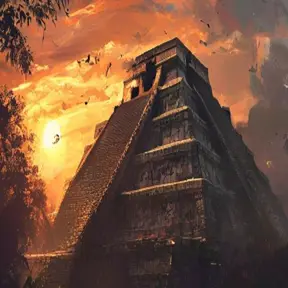
A Maya pyramid in Mexico seems to hold a snake made of shadow and a bird made of echoes. Nobody knows whether that was planned.
Earth
In 1991 a man in Vietnam found a cave by its sound. It has its own river, its own weather and its own jungle.